Leatherwood Honey vs Manuka Honey
A detailed comparison to help you choose the right honey for your needs.
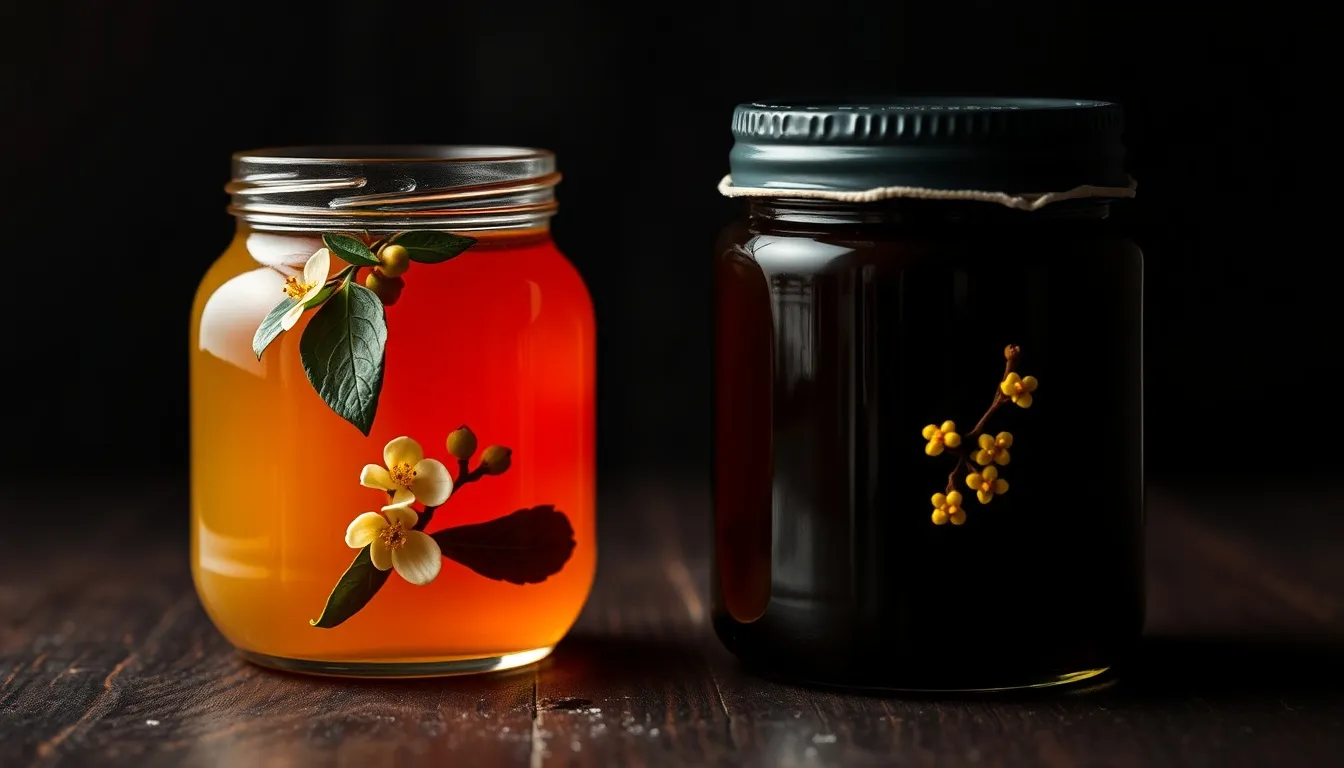
Quick Answer
Leatherwood honey is Tasmania's unique gift to the honey world—an intensely aromatic, spice-perfumed honey unlike anything else. Manuka is New Zealand's clinically validated medicinal honey. Choose leatherwood for its extraordinary and utterly unique flavor experience, manuka for targeted antibacterial health benefits.
At a Glance
Leatherwood Honey
Unique, spicy, perfumed with musky floral notes
Gourmet cooking, cheese pairing, distinctive drizzling
$15-$35 per jar
Tasmania, Australia
Manuka Honey
Rich, earthy, slightly bitter with herbal notes
Medicinal use, wound healing, immune support
$30-$80 per jar
New Zealand
Head-to-Head
Flavor Comparison
Leatherwood honey has one of the most distinctive and polarizing flavor profiles in the entire honey world.
It hits the palate with an almost perfume-like intensity—musky, spicy, floral, with undertones that people variously describe as reminiscent of cloves, cinnamon, nutmeg, and exotic flowers. The aroma is as remarkable as the taste, filling a room when the jar is opened. It is a honey that provokes strong reactions: devotion or avoidance. Manuka honey is bold but in a different register—earthy, herbal, and slightly medicinal. Where leatherwood is exotic spice market, manuka is forest floor after rain. Manuka's intensity comes from its earthy depth rather than aromatic complexity.
Nutrition Comparison
Leatherwood honey contains unique compounds from the leatherwood tree (Eucryphia lucida), which grows only in Tasmanian old-growth rainforest.
Australian research has shown it to possess significant antioxidant and antimicrobial activity, with some studies suggesting antibacterial properties that approach manuka's. Leatherwood honey is also being studied for prebiotic effects. Manuka honey has the most extensive clinical research portfolio of any honey variety, with validated MGO-based antibacterial activity, wound healing applications, and digestive health benefits.
Best Use Cases
Leatherwood honey is a flavor adventure.
Use it in Asian-inspired dishes where its spicy character complements ginger and chili. Pair it with strong blue cheeses or aged gouda. Drizzle it over roasted pumpkin or sweet potato. In desserts, it adds an exotic dimension to ice cream, custards, and spice cakes. It also makes remarkable honey mead. Manuka honey is often taken as a daily spoonful for general wellness, or blended into smoothies; wound care and digestive complaints should be directed by a healthcare provider rather than self-treated with honey.
Price Comparison
Leatherwood honey is reasonably priced at $15 to $35 per jar, offering exceptional value for such a unique and limited-production honey.
Manuka ranges from $30 to $80 and higher. Leatherwood offers arguably more distinctive flavor per dollar than any other premium honey in the world.
Our Verdict
Leatherwood honey is a must-try for every serious honey enthusiast. There is simply nothing else like it—its spicy, perfumed character is a one-of-a-kind experience from ancient Tasmanian rainforest. Manuka honey remains the gold standard for clinically documented health benefits. Both are products of unique environments—one from remote Tasmanian wilderness, the other from New Zealand's tea tree scrublands. Together they represent the best of Antipodean honey.
Frequently Asked Questions
What does leatherwood honey taste and smell like?
Where does leatherwood grow and why is it rare?
Is leatherwood honey antibacterial like manuka?
What foods pair best with leatherwood honey?
Does leatherwood honey crystallize?
Is leatherwood worth buying vs manuka for flavor?
Best Honey For...
More Honey Comparisons
View allRelated Guides
Health Benefits
Nutritional and therapeutic benefits of honey.
Read GuideHoney for Sore Throat
Evidence-based sore throat relief.
Read GuideQuality & Grading
Identify quality honey and spot fakes.
Read GuideRelated Articles
Manuka Honey Benefits: 10 Science-Backed Uses Worth Knowing
10 evidence-based manuka honey benefits — wounds, sore throats, gut health, and skin care. Which UMF/MGO grade to buy.
Read ArticleManuka Honey Grading Systems Explained: UMF vs MGO vs KFactor
UMF vs MGO vs KFactor — manuka honey ratings decoded. Learn what the numbers mean and how to choose authentic manuka.
Read ArticleHoney for Wound Healing: Medical Products and Evidence Limits
Food honey is not a wound dressing. Understand the limits of medical-honey research, product-specific instructions, and when to seek professional care.
Read ArticleHoney for Eye Health: Benefits, Risks, and What Science Says
Can honey benefit eye health? Evidence on antimicrobial and anti-inflammatory properties for dry eyes and conjunctivitis.
Read ArticleRaw Honey vs Manuka Honey: Which Should You Buy?
Raw honey vs manuka honey: compare price, antibacterial strength, taste, and best uses. Is manuka worth the premium?
Read Article