Honey Flavor Wheel
Just as wine and coffee have their flavor wheels, honey has an incredible range of tasting notes. Explore 6 flavor families, 25 subcategories, and dozens of varieties. Learn about the health benefits of raw honey, or find the right variety for you.
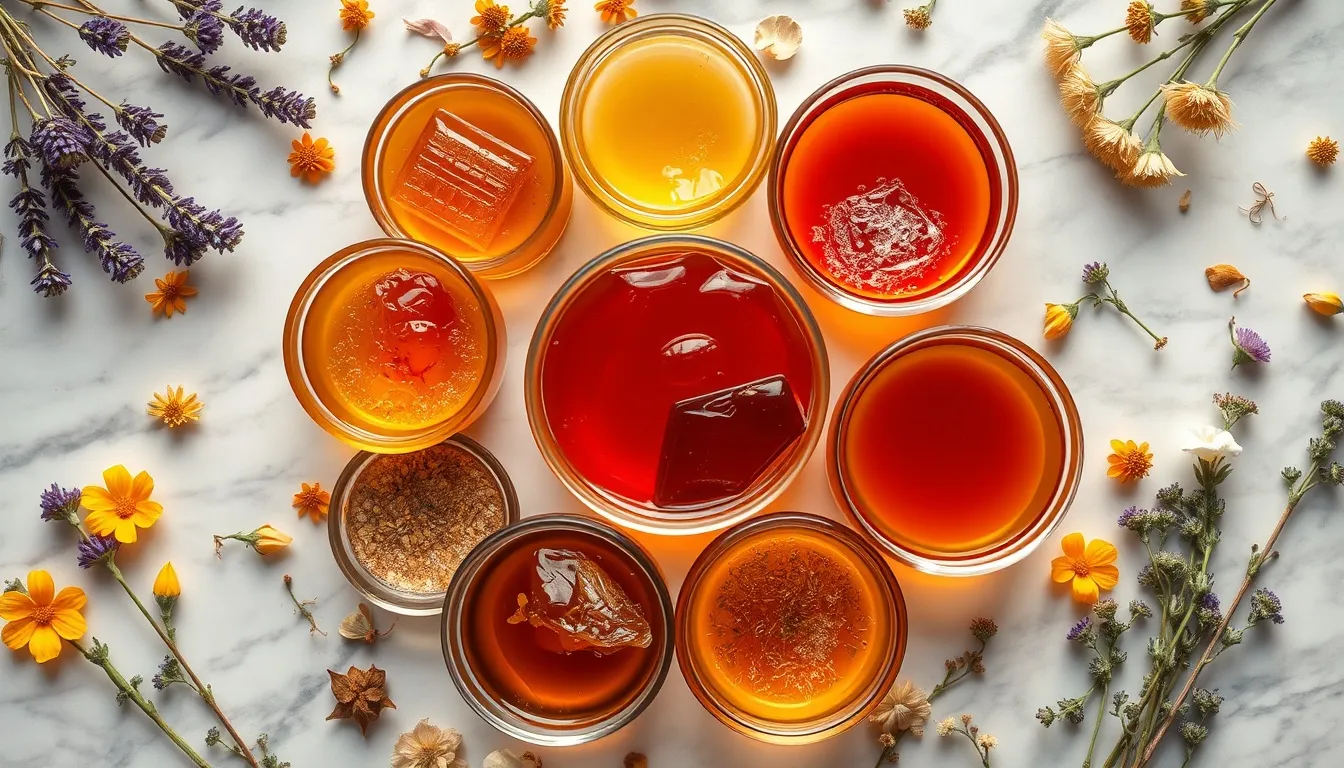
Explore Flavor Categories
Hover or tap a segment to explore
Select a Flavor
Click any segment on the wheel or tap a category to discover which honey varieties match that flavor profile.
Build a 3-Honey Tasting Flight
For the clearest contrast, taste one mild, one floral, and one bold honey side by side. Keep the samples small, taste from lightest to darkest, and write down aroma, body, finish, and aftertaste.
How to Taste Honey Like a Pro
Professional honey tasters follow a systematic process. Use this guide to develop your palate and discover flavors you never knew honey could have.
1. Look
Hold the honey up to the light. Color ranges from nearly clear (acacia) to almost black (buckwheat). Lighter honeys are generally milder; darker honeys tend to be bolder \u2014 see our honey color scale for all 7 USDA Pfund grades. Notice the viscosity \u2014 thicker honey often has a richer mouthfeel.
2. Smell
Bring the honey to your nose and inhale gently. You may detect floral notes, fruit, spice, earth, or caramel. The aroma tells you a lot about what to expect on the palate. Some honeys like lavender are immediately recognizable by scent alone.
3. Taste
Place a small amount on your tongue and let it sit for a moment before swallowing. Notice the initial sweetness, then the mid-palate flavors. Does it taste fruity? Floral? Earthy? Is there bitterness or spice? How long does the flavor linger after swallowing?
4. Feel
Pay attention to the texture and mouthfeel. Some honeys are smooth and silky (acacia), others are thick and creamy (crystallized clover), and some have a slight graininess (heather). The mouthfeel is an important part of the overall tasting experience.
5. Compare
Tasting honeys side by side reveals differences you would never notice individually. Start with a mild honey and progress toward bolder varieties. Cleanse your palate between samples with water and unsalted crackers. Not sure which honeys to compare? Our recommender quiz narrows 20 catalogue honeys to your taste and use case in 4 questions.
Understanding Honey Flavor Profiles
Every honey variety falls along a spectrum of six primary flavor categories. Most honeys combine elements from multiple categories, creating complex profiles.
Honey Flavor Pairings
Floral honeys
Fresh fruit, yogurt, light cheeses, green tea, scones
Try: Lavender honey + goat cheese + walnuts
Fruity honeys
Toast, oatmeal, cocktails, fruit salads, pancakes
Try: Orange blossom honey + ricotta + figs
Earthy honeys
Aged cheeses, roasted vegetables, hearty breads, red wine
Try: Chestnut honey + Manchego + quince paste
Sweet honeys
Desserts, ice cream, coffee, biscuits, pastries
Try: Acacia honey + vanilla ice cream + pistachios
Bold honeys
Blue cheese, dark chocolate, stout beer, BBQ rubs
Try: Buckwheat honey + Roquefort + pear
Spicy honeys
Grilled meats, stir-fries, hot drinks, Middle Eastern cuisine
Try: Manuka honey + ginger tea + lemon
Frequently Asked Questions
What determines the flavor of honey?
Honey flavor is primarily determined by the floral source (the type of flowers bees visit), but geography, soil conditions, climate, and season also play important roles. Just as wine grapes express terroir, honey reflects the unique environment where it was produced.
How do I taste honey like a professional?
Professional honey tasters use a systematic approach: First, observe the color and viscosity. Then smell the aroma before tasting. Place a small amount on your tongue and let it warm before swallowing. Note the initial sweetness, mid-palate flavors, and finish. Cleanse your palate with water and plain crackers between samples.
Why does the same type of honey taste different from different producers?
Even within the same floral type, honey flavor varies based on local soil composition, weather patterns during the bloom, elevation, what other flowers were blooming nearby, and the specific bee subspecies. A clover honey from Wisconsin will taste noticeably different from clover honey from New Zealand.
What is the mildest honey for people who find honey too strong?
Acacia honey is widely considered the mildest honey, with a very light, almost transparent appearance and a clean, delicate sweetness with minimal aftertaste. Clover and alfalfa honeys are also mild and widely available options for people who prefer a gentler honey flavor.
What is the strongest-flavored honey?
Buckwheat honey is one of the most intensely flavored honeys, with deep molasses-like notes, malt, and a robust earthy character. Chestnut honey, avocado honey, and some dark wildflower honeys are also known for their bold, complex flavor profiles.
Related Guides
Floral Sources Guide
Learn about honey varieties by floral origin.
Read GuideHoney Types Explained
Raw, filtered, pasteurized, creamed, and more.
Read GuideWhat Honey Should I Buy?
Personalized quiz to find your perfect honey.
Read GuideRelated Articles
Honey Tasting Guide: How to Taste Honey Like an Expert
Learn how to taste honey like an expert: the 5 sensory elements, setting up a tasting flight, flavor notes for 12 major varieties, and the best food...
Read ArticleTypes of Honey: A Complete Guide to 20+ Varieties
Guide to 20+ honey varieties — clover, manuka, buckwheat, wildflower, and more. How floral source affects flavor and use.
Read ArticleDark Honey vs Light Honey: What the Color Really Means
Is dark honey healthier? Learn what color tells you about antioxidants, minerals, flavor, and which type suits your needs.
Read ArticleReady to Explore Honey Varieties?
Now that you know what flavors to look for, browse our collection and find your perfect honey.