Add honeys to your comparison list by clicking the compare icon on any honey card.
Explore detailed side-by-side comparisons of the most popular honey varieties.
Manuka honey contains methylglyoxal (MGO) at concentrations from 83 to 1,200+ mg/kg, measured by the UMF scale...
Raw honey is unprocessed and retains all its natural enzymes, pollen, and antioxidants. Regular (processed) ho...
Manuka delivers clinically validated antibacterial activity via MGO for wound care and immune support; buckwhe...
Clover is the consistent, versatile everyday honey — mild flavor (GI ~69), ideal for baking and tea where hone...
Manuka is a premium medicinal honey with clinically validated antibacterial properties, while clover is the ev...
Acacia honey is the more refined option with a delicate vanilla flavor, exceptionally slow crystallization, an...
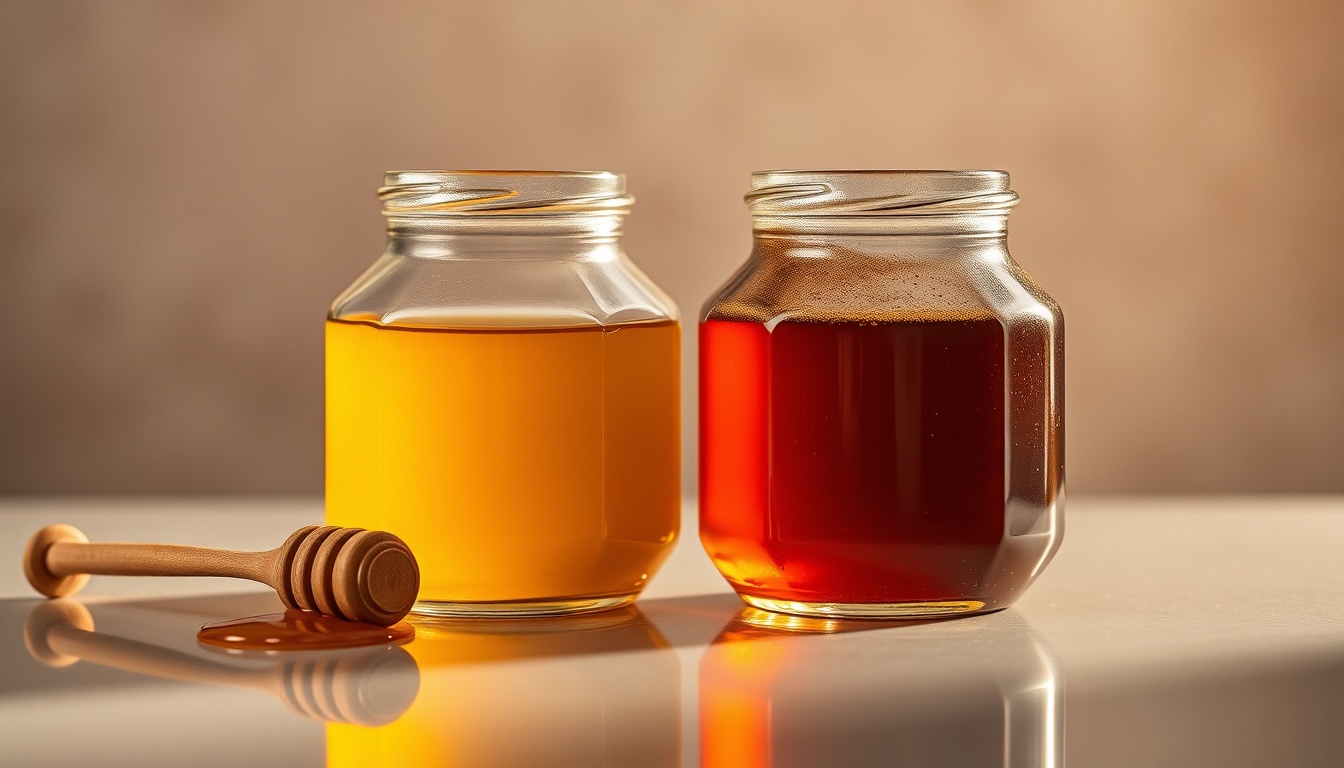
Buckwheat and clover honey are polar opposites in flavor and appearance. Buckwheat is dark, bold, and malty wi...
Orange blossom honey brings a distinctive citrusy fragrance and floral complexity that brightens teas with cit...
Raw honey retains all natural enzymes, pollen, and antioxidants because it is never heated above natural hive ...
Light honeys offer mild, approachable flavors ideal for everyday sweetening and delicate dishes. Dark honeys p...
All authentic manuka honey is raw, but not all raw honey is manuka. Manuka's unique methylglyoxal (MGO) provid...
Tupelo honey is a rare, premium American honey prized for its buttery smoothness and remarkably slow crystalli...
Wildflower honey is a variable, moderately complex honey that changes with each harvest, while buckwheat is co...
Eucalyptus honey is the affordable respiratory-relief specialist with a natural mentholated character; manuka ...
Lavender honey (Provence AOP Miel de Lavande) carries distinctive linalool aromatics — the same terpene compou...