Manuka Honey Benefits
From ancient New Zealand to modern medicine cabinets, Manuka honey has earned its reputation as the world's most potent therapeutic honey. Learn what makes it unique and how to use it.
Last updated:
Manuka honey from New Zealand contains methylglyoxal (MGO), a unique antibacterial compound stable in body tissue where regular honey's hydrogen peroxide is destroyed. It is FDA-cleared as a medical device for wound care. Honey broadly is effective as a cough suppressant (BMJ Evidence-Based Medicine 2020 systematic review, 14 studies); Manuka's MGO adds targeted antibacterial activity against throat pathogens where peroxide-based honeys lose activity. Manuka also inhibits H. pylori bacteria. Look for UMF 10+ (MGO 263+) for daily wellness or UMF 15+ (MGO 514+) for therapeutic use. Genuine Manuka carries a UMF or MGO certification; in our catalogue, the middle half of 17 verified manuka jars cost $29 to $71 (Oct 7, 2026). Never give honey to infants under 12 months.
What Do the UMF Ratings Mean?
What Makes Manuka Honey Different?
Manuka honey is produced by bees that forage on the nectar of the Manuka bush (Leptospermum scoparium), a flowering shrub native to New Zealand and parts of southeastern Australia. While all raw honey has some antibacterial properties — primarily from hydrogen peroxide produced by the enzyme glucose oxidase — Manuka honey contains an additional, unique antibacterial compound that sets it apart from every other honey in the world: methylglyoxal (MGO). Methylglyoxal forms naturally from the conversion of dihydroxyacetone (DHA), a compound found in unusually high concentrations in Manuka flower nectar. What makes MGO so significant is that it provides what scientists call "non-peroxide antibacterial activity." Regular honey varieties like pure clover honey rely primarily on hydrogen peroxide for antibacterial power, which is easily neutralized by enzymes in human tissue (catalase) and by exposure to heat or light. Manuka's MGO, however, remains stable and active even when hydrogen peroxide is broken down. This means Manuka honey retains its antibacterial effectiveness in situations where regular honey would lose its potency — inside wounds, on the skin, and in the digestive tract. The concentration of MGO in Manuka honey can range from 30 mg/kg in low-grade varieties to over 1,000 mg/kg in premium medical-grade products, making it the most potent natural antibacterial honey available.
What Do UMF and MGO Ratings Mean?
Navigating Manuka honey ratings can be confusing because two competing grading systems exist, but understanding them is essential for choosing the right product. The UMF (Unique Manuka Factor) system was developed by the UMF Honey Association in New Zealand. It's a comprehensive grading that measures multiple markers of quality and potency: MGO content, DHA levels, leptosperin (a chemical unique to Manuka nectar that confirms authenticity), and HMF (hydroxymethylfurfural, which indicates whether the honey has been overheated). UMF ratings break down as follows: UMF 5+ is considered low-grade and suitable for general table use; UMF 10+ is good quality with meaningful antibacterial properties; UMF 15+ is premium grade with strong therapeutic potential; and UMF 20+ and above is medical-grade Manuka with the highest antibacterial activity. The MGO rating system is simpler — it measures only the methylglyoxal content in milligrams per kilogram. The published equivalences from the UMF Honey Association are: MGO 83+ equals UMF 5+, MGO 263+ equals UMF 10+, MGO 514+ equals UMF 15+, and MGO 829+ equals UMF 20+. Higher ratings always indicate stronger antibacterial properties and higher price points. For general wellness, UMF 10+ or MGO 263+ is a good starting point. For specific therapeutic applications like wound care or digestive issues, UMF 15+ or MGO 514+ is recommended. Both rating systems are legitimate and regulated — look for one or the other on any Manuka honey you purchase.
What Are Manuka Honey's Proven Health Benefits?
Manuka honey's health benefits are backed by a growing body of clinical research — it's not just folk medicine. Perhaps the most well-established application is wound healing. Medihoney, a medical-grade Manuka honey product, has been cleared by the U.S. Food and Drug Administration (FDA) as a medical device for wound and burn care under 510(k) clearance. Clinical studies have shown that Manuka honey promotes faster wound healing by maintaining a moist wound environment, reducing inflammation, stimulating tissue regeneration, and actively fighting bacterial infection — including antibiotic-resistant strains like MRSA. For sore throats and upper respiratory infections, honey has strong clinical evidence: a 2020 systematic review in BMJ Evidence-Based Medicine (14 studies, 1,761 participants) found honey superior to usual care and as effective as pharmaceutical cough suppressants. The clinical trials used buckwheat honey, eucalyptus, and other honey varieties — not Manuka specifically — but Manuka's high MGO content adds targeted antibacterial activity against throat pathogens such as Streptococcus pyogenes, where regular honey's hydrogen peroxide is neutralized by tissue catalase enzymes. In digestive health, research has demonstrated that Manuka honey can inhibit the growth of Helicobacter pylori, the bacterium responsible for most stomach ulcers and chronic gastritis. It may also help reduce inflammation in the digestive tract and support beneficial gut bacteria. Surprisingly for a sweet substance, Manuka honey benefits oral health: studies have shown it reduces levels of harmful oral bacteria, including Streptococcus mutans (the primary cause of tooth decay) and Porphyromonas gingivalis (associated with gum disease). For skin health, Manuka honey is used topically for acne treatment, eczema management, and general skin rejuvenation, thanks to its antibacterial, anti-inflammatory, and moisture-retaining properties.
How Do You Identify Authentic Manuka Honey?
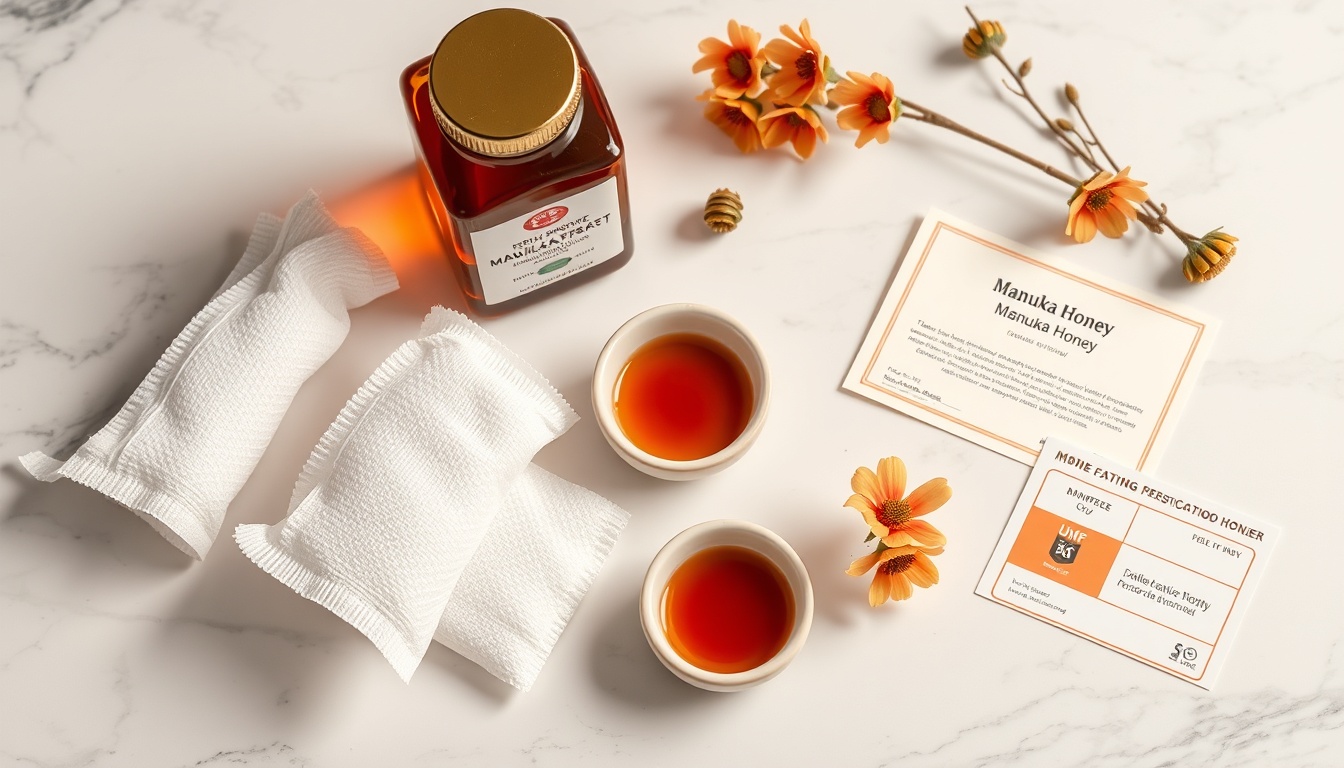
The Manuka honey market is plagued by fraud. It's estimated that far more "Manuka honey" is sold worldwide each year than is actually produced — some industry estimates suggest the ratio is as high as three to one. This makes knowing how to identify authentic Manuka critically important. The first and most reliable indicator is a UMF or MGO certification mark on the label. The UMF Honey Association conducts independent testing and auditing of licensed producers, and only honey that passes rigorous chemical analysis can carry the UMF trademark. Similarly, legitimate MGO-rated products are tested by certified laboratories. Look for specific numbers (UMF 10+, MGO 263+) rather than vague claims like "Manuka blend" or "with Manuka honey," which often indicate products that contain only trace amounts of genuine Manuka. Verify the country of origin — authentic Manuka honey comes from New Zealand or, to a lesser extent, from specific regions of southeastern Australia where Leptospermum species grow. Many high-quality producers include a batch number and traceability information that allows you to verify the product's origin and testing results online. Price is a useful indicator: in our catalogue, the middle half of 17 verified manuka jars cost $29 to $71 (Oct 7, 2026), and a UMF 10+ jar lists at $34.99-54.99 — two to three times what Appalachian sourwood honey ($14-23) costs, reflecting Manuka's unique MGO content. If you see "Manuka honey" at bargain-basement prices, it's almost certainly not the real thing. Buy from reputable retailers, directly from certified New Zealand producers, or from specialty stores that can verify their supply chain.
How Should You Use Manuka Honey?
Getting the most out of your Manuka honey means understanding where its evidence is strongest. Manuka's clinical reputation for wound care comes from medical-grade, sterile products (UMF 15+) used under professional supervision — talk to a healthcare provider about wound management rather than treating wounds, burns, or abrasions at home. For general wellness, many people include Manuka honey (UMF 10+ or higher) in their diet, either straight off the spoon or dissolved in warm (not hot) water. For sore throat relief, some people let Manuka honey dissolve slowly in the mouth, or stir it into warm water with lemon — but the water temperature should not exceed 104 degrees Fahrenheit (40 degrees Celsius), as higher temperatures begin to degrade the MGO that gives Manuka its special properties. Manuka is also used by some people as a raw-honey face mask as part of a skincare routine; persistent or severe acne is best managed by a dermatologist, not a home honey treatment. One critical rule applies to all uses: never cook with Manuka honey or add it to very hot liquids. The heat destroys the methylglyoxal and other bioactive compounds, turning an expensive therapeutic product into ordinary honey. Save your Manuka for uses where its unique properties matter, and use a less expensive honey for cooking and baking.
Frequently Asked Questions
What makes Manuka honey different from regular honey?
Manuka honey contains methylglyoxal (MGO), a unique antibacterial compound not found in other honeys. This gives it stable, non-peroxide antibacterial activity that remains effective even when regular honey would lose its potency — inside wounds, on the skin, and in the digestive tract. Regular varieties like clover honey ($9-15) or wildflower honey ($13-24) rely primarily on hydrogen peroxide for antibacterial properties, which is easily neutralized by body enzymes. Manuka's MGO remains active even when peroxide-based activity is destroyed.
What do UMF and MGO ratings mean?
UMF (Unique Manuka Factor) is a comprehensive grading that measures MGO, DHA, leptosperin, and HMF levels. MGO ratings measure only methylglyoxal content in mg/kg. Published UMFHA equivalences: MGO 263+ = UMF 10+, MGO 514+ = UMF 15+, MGO 829+ = UMF 20+. UMF 10+ (MGO 263+) is the minimum recommended for therapeutic use.
What health benefits does Manuka honey have?
Manuka honey is FDA-cleared as a medical device for wound and burn care, effective as a cough suppressant, shown to inhibit H. pylori bacteria that cause stomach ulcers, and beneficial for oral health by reducing harmful bacteria that cause tooth decay and gum disease. For general immune support, buckwheat honey ($9-23) offers high antioxidants (ORAC 16,000+) as a more affordable option, though it lacks Manuka's unique MGO antibacterial mechanism.
How can you tell if Manuka honey is authentic?
Look for a UMF or MGO certification mark with a specific rating number, verify it comes from New Zealand, and expect it to cost more than other varieties: in our catalogue, the middle half of 17 verified manuka jars cost $29 to $71 (Oct 7, 2026). Avoid products labeled vaguely as "Manuka blend" or priced suspiciously low — the UMF Honey Association independently audits licensed producers. For everyday sweetening without therapeutic claims, acacia honey ($9-16) offers excellent quality at lower cost with slow crystallization.
What UMF or MGO grade do I actually need?
For daily general wellness, UMF 5+–10+ (MGO 83–263) provides gentle antibacterial benefit. For sore throats, mild wounds, and digestive support, UMF 10+ (MGO 263+) is the most clinically referenced threshold. For burn and wound care, UMF 15+ (MGO 514+) matches the Medihoney clinical formulation. Medical-grade wound care typically specifies UMF 20+ (MGO 829+).
Can children or infants have Manuka honey?
Manuka honey is safe for children over 12 months old. Like all honey, it must never be given to infants under 12 months — honey naturally contains dormant Clostridium botulinum spores that can germinate in an infant's immature gut and cause infant botulism. This applies regardless of grade, quality, or UMF/MGO rating.
Which honey varieties should I choose for different health goals?
For therapeutic antibacterial benefits: Manuka honey UMF 10+ (MGO 263+) provides unique methylglyoxal activity. For high antioxidants: buckwheat honey ($9-23) delivers ORAC 16,000+ phenolic compounds. For everyday wellness: wildflower honey ($13-24) offers balanced complexity with local pollen benefits. For gentle digestive support: acacia honey ($9-16) has low GI 32-42 and slow crystallization. For budget-conscious daily use: clover honey ($9-15) provides reliable mild sweetness. Choose Manuka when you specifically need proven antibacterial activity; other varieties excel for general wellness, antioxidants, or everyday sweetening.
Edited by Sam French · Raw Honey Guide Editorial Team
Source reviewed against primary literature and official guidance where available. Health content is educational, not medical advice, and does not replace a licensed clinician.
Get the Honey Buyer's Cheat Sheet (free PDF)
16 varieties on one page — color, flavor, best use and what a fair price looks like — from the 304 honeys we track.
Related Guides
Health Benefits
Nutritional and therapeutic benefits of honey.
Read GuideHoney for Sore Throat
Evidence-based sore throat relief.
Read GuideQuality & Grading
Identify quality honey and spot fakes.
Read GuideRelated Articles
Manuka Honey Benefits: 10 Science-Backed Uses Worth Knowing
10 evidence-based manuka honey benefits — wounds, sore throats, gut health, and skin care. Which UMF/MGO grade to buy.
Read ArticleManuka Honey Grading Systems Explained: UMF vs MGO vs KFactor
UMF vs MGO vs KFactor — manuka honey ratings decoded. Learn what the numbers mean and how to choose authentic manuka.
Read ArticleHoney for Wound Healing: Medical Products and Evidence Limits
Food honey is not a wound dressing. Understand the limits of medical-honey research, product-specific instructions, and when to seek professional care.
Read ArticleHoney for Eye Health: Benefits, Risks, and What Science Says
Can honey benefit eye health? Evidence on antimicrobial and anti-inflammatory properties for dry eyes and conjunctivitis.
Read ArticleRaw Honey vs Manuka Honey: Which Should You Buy?
Raw honey vs manuka honey: compare price, antibacterial strength, taste, and best uses. Is manuka worth the premium?
Read ArticleBrowse Manuka honey varieties
Browse Manuka Honey