Choose honey for the fig you have
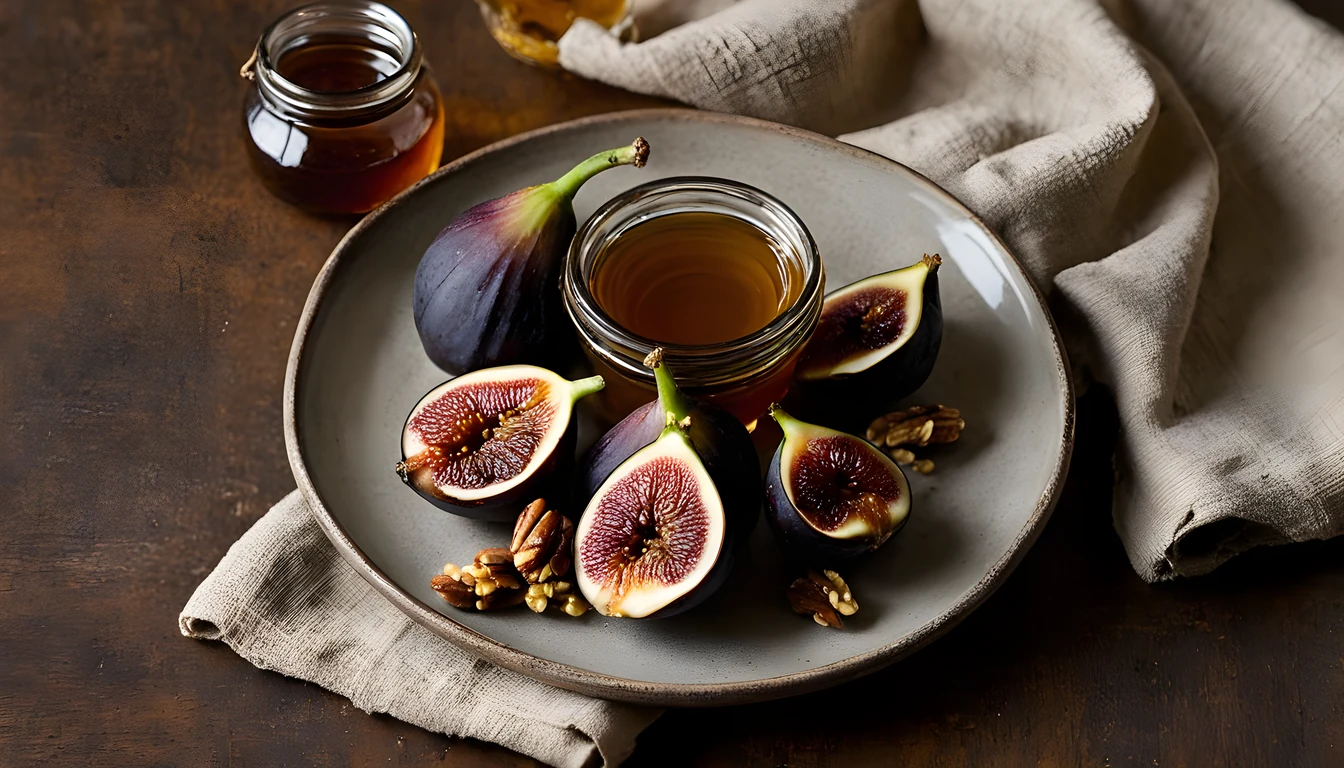
Fresh figs are soft and already sweet, so a small amount of honey can be enough to add aroma. Dried figs have a denser flavor and can hold their own beside a darker honey. The pairing changes again when figs are roasted or turned into a preserve.
The card makes roasted figs with honey and goat cheese. The guide also keeps a separate refrigerator preserve and cheese-board suggestions; those preparations have their own quantities and are not part of the roasted-fig nutrition.
Recipe
Roasted Figs with Honey and Goat Cheese
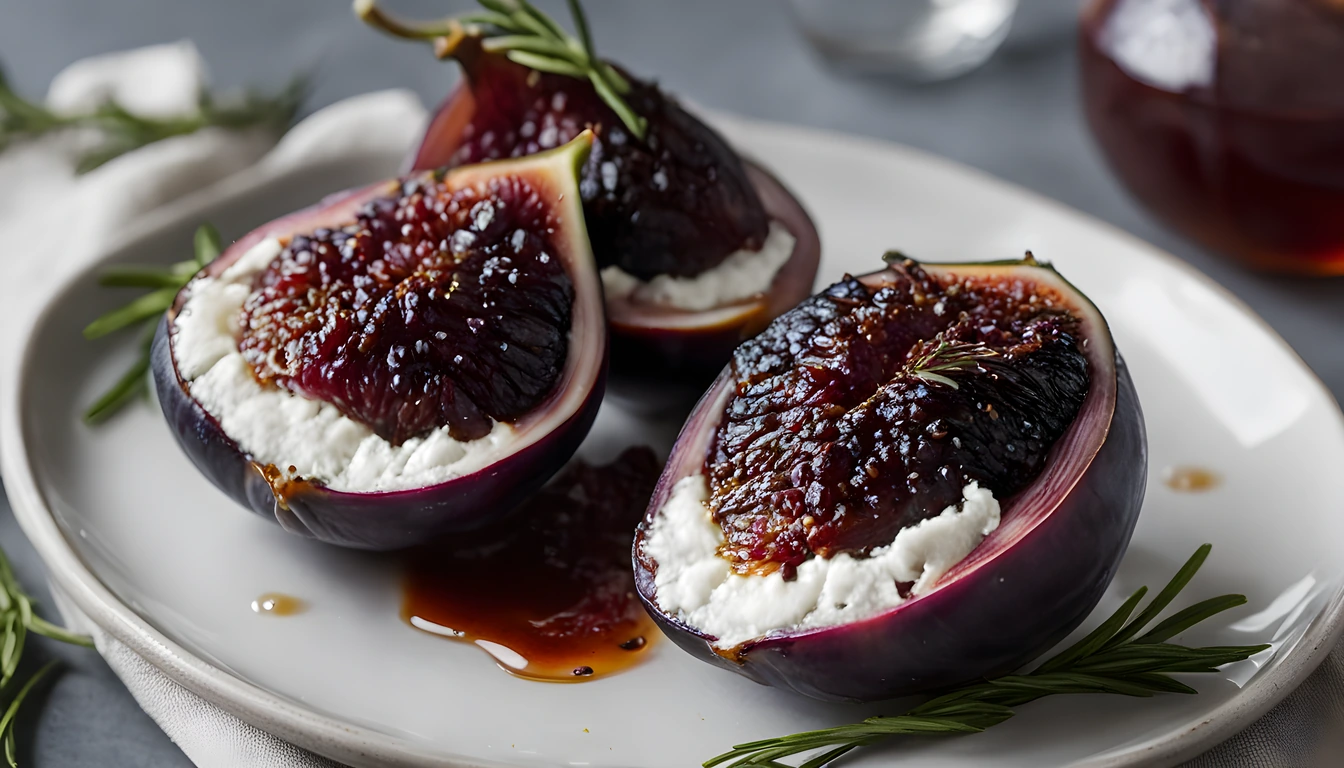
Fresh fig halves roasted with honey and olive oil, then topped with honeyed soft goat cheese, rosemary and weighed salt. Four servings in about 20 minutes.
6Ingredients
Yield: 4 servings
- 600 g fresh figs, stemmed and halved
- 113.4 g soft goat cheese
- 2 tablespoons wildflower honey (42 g), divided
- 1 tablespoon olive oil (13.5 g)
- 1 g flaky sea salt
- 1 g fresh rosemary leaves, finely chopped
Ingredient amounts scale; instructions show the original batch. Cooking times and pan sizes may need adjustment. Season to taste. Honey grams use US measures at 20°C and 17.5% moisture, a density estimate; weigh your honey for precision.
Instructions
- 1Prepare the figsHeat the oven to 400°F (200°C). Line a rimmed sheet pan with parchment. Weigh the figs after removing stems, then halve lengthwise.
- 2RoastSet the halves cut-side up. Drizzle evenly with olive oil and 1 tablespoon of the measured honey. Roast for 8–10 minutes, until softened and lightly colored at the edges.
- 3Mix the goat cheeseWhile the figs roast, beat the soft goat cheese with the remaining 1 tablespoon honey until spreadable.
- 4Top and portionDivide the goat-cheese mixture over the warm fig halves and finish with the measured salt and rosemary. Divide the complete tray into 4 portions. Nuts, crackers, bread and extra honey are separate additions.
Estimated nutrition per serving
247.93 calories · 9.82 g fat · 37.5 g carbohydrate · 6.41 g protein · 229.18 mg sodium
Serving: 1/4 roasted-fig tray
Calculated from ingredient weights and USDA FoodData Central: 173021, 173435, 169640, 171413, 173468, 173473. Estimates use ingredient input weights; actual portions, brands and cooking losses vary. Omitted nutrient values are unavailable, not zero.
Fresh figs, dried figs and fig preserve
With delicate fresh figs, begin with mild clover or orange blossom and a thin drizzle. Taste a piece of fruit first: ripeness changes the sweetness more than a variety name alone can tell you.
Dried figs are chewy and concentrated. Wildflower or a little buckwheat can give a stronger contrast, especially with cheese. A fig preserve is already sweet and sticky, so honey is often best used as a small aromatic finish rather than an automatic extra spoonful.
Get the Honey Buyer's Cheat Sheet (free PDF)
16 varieties on one page — color, flavor, best use and what a fair price looks like — from the 304 honeys we track.
Choosing a honey for the flavor
The honey pairing guide covers the wider choice. Clover honey is mild, wildflower honey adds floral depth, orange blossom honey brings citrus-floral notes, and buckwheat honey is dark and malty.
The chart uses an editorial 1–5 flavor-intensity scale as a pairing aid. Jars and harvests vary, so taste the honey you have before changing the recipe.
1 = mild, 5 = bold. Editorial pairing guidance, not laboratory measurements; jars vary.
- Clover
- Fresh figs and mild cheese
- Orange blossom
- Roasted figs with goat cheese
- Wildflower
- Fig preserve or cheese board
- Buckwheat
- Dried figs and aged cheese
Matching a honey to another dish: the honey flavor map
Roasted figs: soft fruit and a tangy topping
Use figs that give gently when pressed. Very firm fruit may stay dry, while damaged fruit can collapse quickly. Weigh after removing the stems; the number of figs varies with their size.
Roast the halves cut-side up with part of the measured honey, then add the honeyed goat cheese after the tray comes out. This keeps the topping distinct. Rosemary and salt are measured so the base can be repeated; nuts and an extra drizzle are optional serving additions.
Honey-sweetened refrigerator fig preserve
For a separate small-batch preserve, combine 900 g stemmed chopped figs, 170 g honey, 60 g lemon juice, 1 teaspoon vanilla and a small pinch of salt in a heavy pan. Bring to a boil, then simmer and stir until thick, usually about 30–40 minutes. The actual yield depends on evaporation.
Cool, put in clean covered containers and refrigerate for prompt use, or freeze suitable small portions. This is a refrigerator preparation, not a validated canning process; do not treat lemon added for flavor as proof of shelf stability. Its nutrition is separate from the roasted figs.
Figs and honey on a cheese board
Set fresh fig halves, a few dried figs and two contrasting honeys beside the cheeses. Let each person add a small drizzle. The honey and cheese guide covers more combinations.
Try soft goat cheese with fresh figs and wildflower, manchego with dried figs and orange blossom, or aged cheddar with fig preserve and a little buckwheat. Honey and ricotta and honey and pistachios offer two other ways to build the plate.
More ways to use the pairing
Add sliced figs and ricotta to a flatbread, then drizzle honey after baking. Spoon the refrigerator preserve over toast or yogurt, or serve warm roasted figs with a small scoop of honey ice cream.
Keep prepared fruit and dairy chilled when making them ahead. Refrigerate cooked leftovers promptly and use within 3–4 days under USDA’s general guidance; assembled goat-cheese figs taste best soon after preparation.
Nutrition for the recipe card
The measured recipe makes 4 servings. One portion, 1/4 roasted-fig tray, contains an estimated 247.93 calories, 9.82 g fat, 4.7 g saturated fat, 37.5 g carbohydrate, 4.41 g fiber, 6.41 g protein, 229.18 mg sodium. These are USDA ingredient-weight estimates, not measurements of the finished food.
All measured figs, goat cheese, honey, oil, salt and rosemary are divided into 4 portions. Crackers, bread, nuts, extra honey and the separate fig preserve are not included.
The source records do not provide complete values for sugars in this combination. Those fields are unavailable rather than reported as zero.
- USDA FoodData Central 173021: Figs, raw.
- USDA FoodData Central 173435: Cheese, goat, soft type.
- USDA FoodData Central 169640: Honey.
- USDA FoodData Central 171413: Oil, olive, salad or cooking.
- USDA FoodData Central 173468: Salt, table.
- USDA FoodData Central 173473: Rosemary, fresh.