The Short Answer: Both Are Added Sugars
Neither honey nor brown sugar is a universal health winner. Both count as added sugars. Honey has fewer calories and less total sugar at an equal weight in the USDA reference entries below, but the amount you actually use still matters.
The FDA includes honey and table sugar in its added-sugars guidance. A floral flavor, brown color or raw label does not remove that sugar from your diet. Choose the flavor and portion that fit your food rather than treating either sweetener as a health upgrade.
For a quick kitchen decision, keep brown sugar when you want the recipe's molasses flavor and granulated ingredient; choose honey when you want its flavor in a drizzle, dressing or glaze. Baking substitutions need more care than swapping the jar on the table.
Nutrition Compared at the Same Weight: 100 g
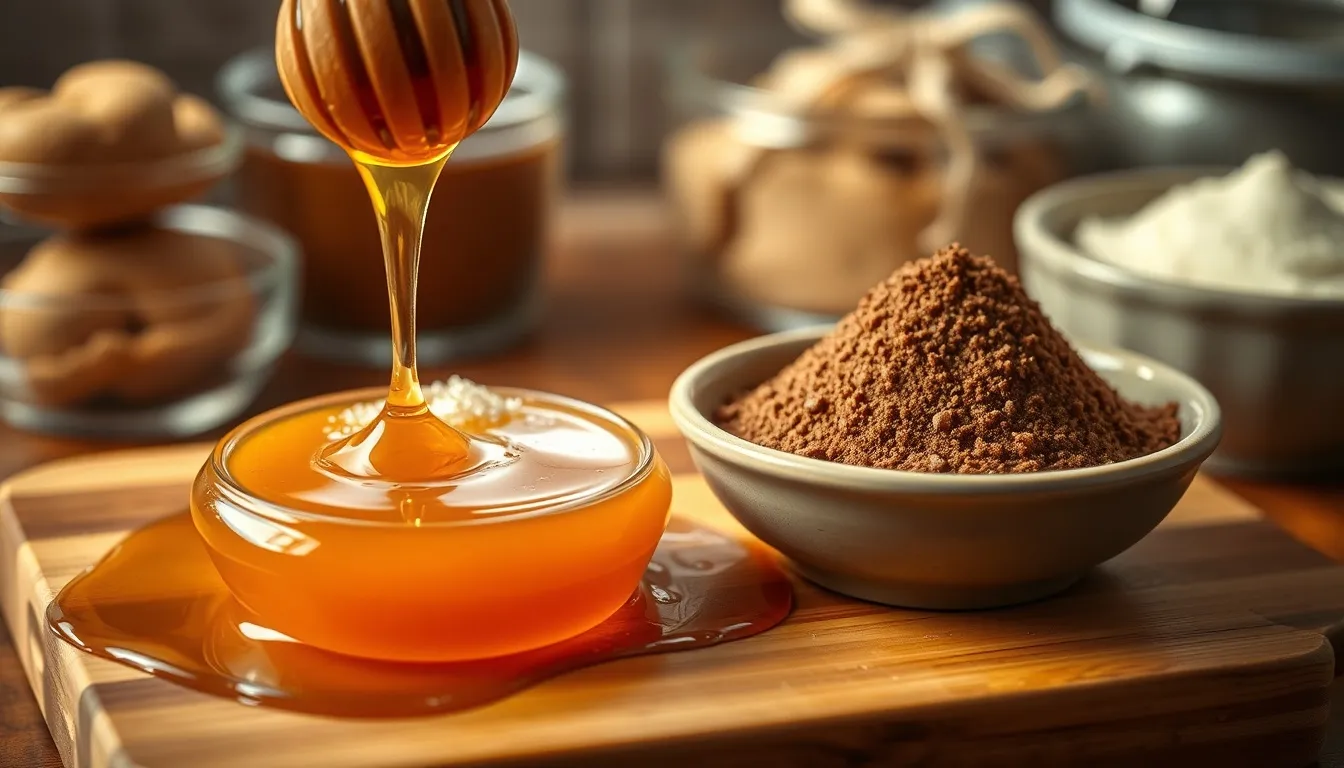
These USDA FoodData Central SR Legacy entries compare Honey, FDC 169640 with Sugars, brown, FDC 168833. Every number below is per 100 g of the ingredient, not per tablespoon or a recommended portion.
- Energy: Honey 304 kcal; brown sugar 380 kcal.
- Total carbohydrate: Honey 82.4 g; brown sugar 98.09 g.
- Total sugars: Honey 82.12 g; brown sugar 97.02 g.
- Water: Honey 17.1 g; brown sugar 1.34 g.
Pro Tip
Equal weight answers one comparison question; it does not make equal spoonfuls or different recipes equivalent. For the amount you eat, check the product label and weigh the sweetener used. A packed measure of brown sugar needs a stated weight before it can be compared fairly with honey.
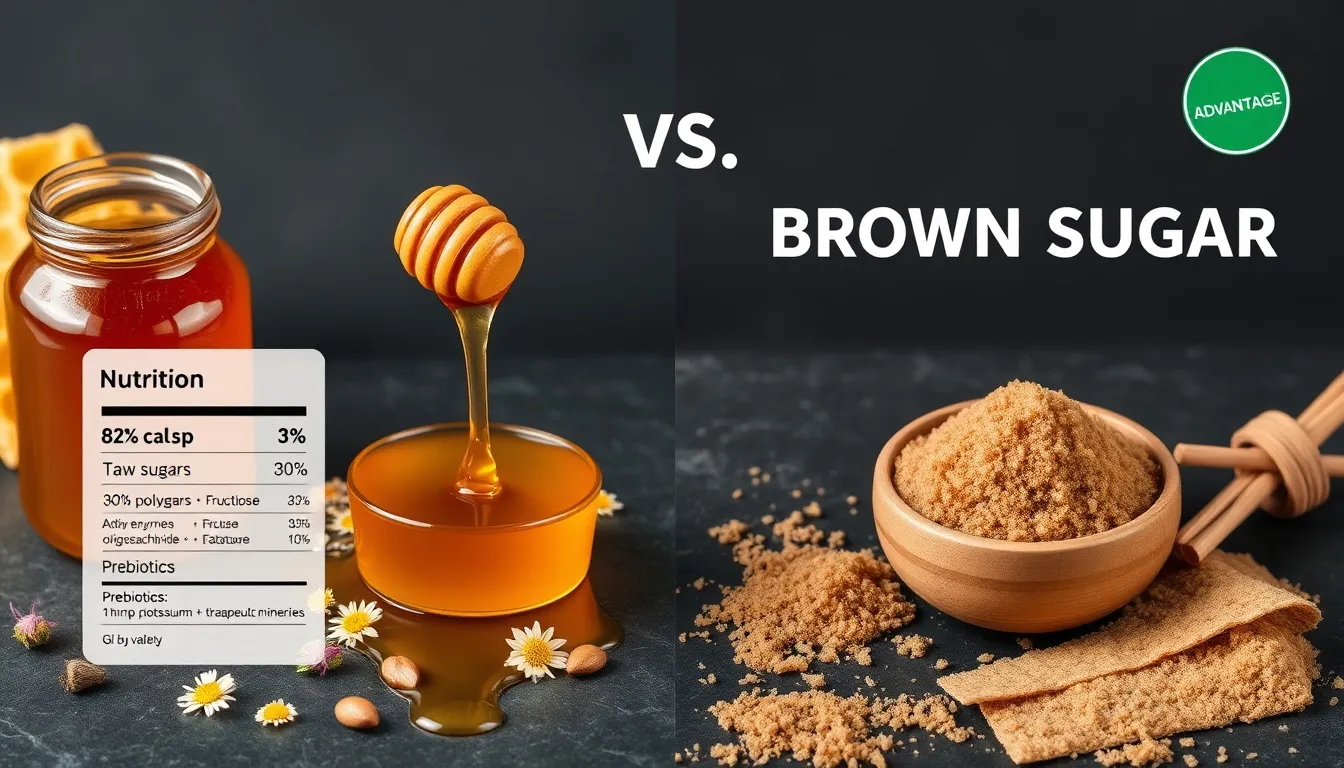
Get the Honey Buyer's Cheat Sheet (free PDF)
16 varieties on one page — color, flavor, best use and what a fair price looks like — from the 304 honeys we track.
What the Health Research Can Tell You
A 2022 systematic review and meta-analysis included 18 controlled trials of honey intake. Its abstract reports low-certainty findings for fasting glucose, total cholesterol, LDL cholesterol and triglycerides. Those findings do not establish that every honey is healthier than brown sugar, or that switching sweeteners will improve an individual's health.
This comparison does not assign a glycemic-index score to a jar or recommend a honey variety for blood-sugar control. For carbohydrate decisions, compare the serving and total carbohydrate on the label. Our honey nutrition facts guide explains the label. This comparison does not establish a recommended daily honey serving. Use the daily added-sugar guide to count honey with other added or free sugars.
Flavor and Food Uses: Choose the Result You Want
Common light and dark brown sugars are granulated sugar with molasses added. Dark brown sugar gives a more pronounced molasses flavor and darker color than light brown sugar, as King Arthur's brown-sugar guide explains. Use the type named in a recipe when you want its intended flavor.
Honey is a liquid sweetener whose flavor varies by variety. Taste the jar before committing it to a full batch: a flavor you enjoy on toast may be too noticeable in a delicate cake. Our honey tasting guide helps you describe and compare the flavors.
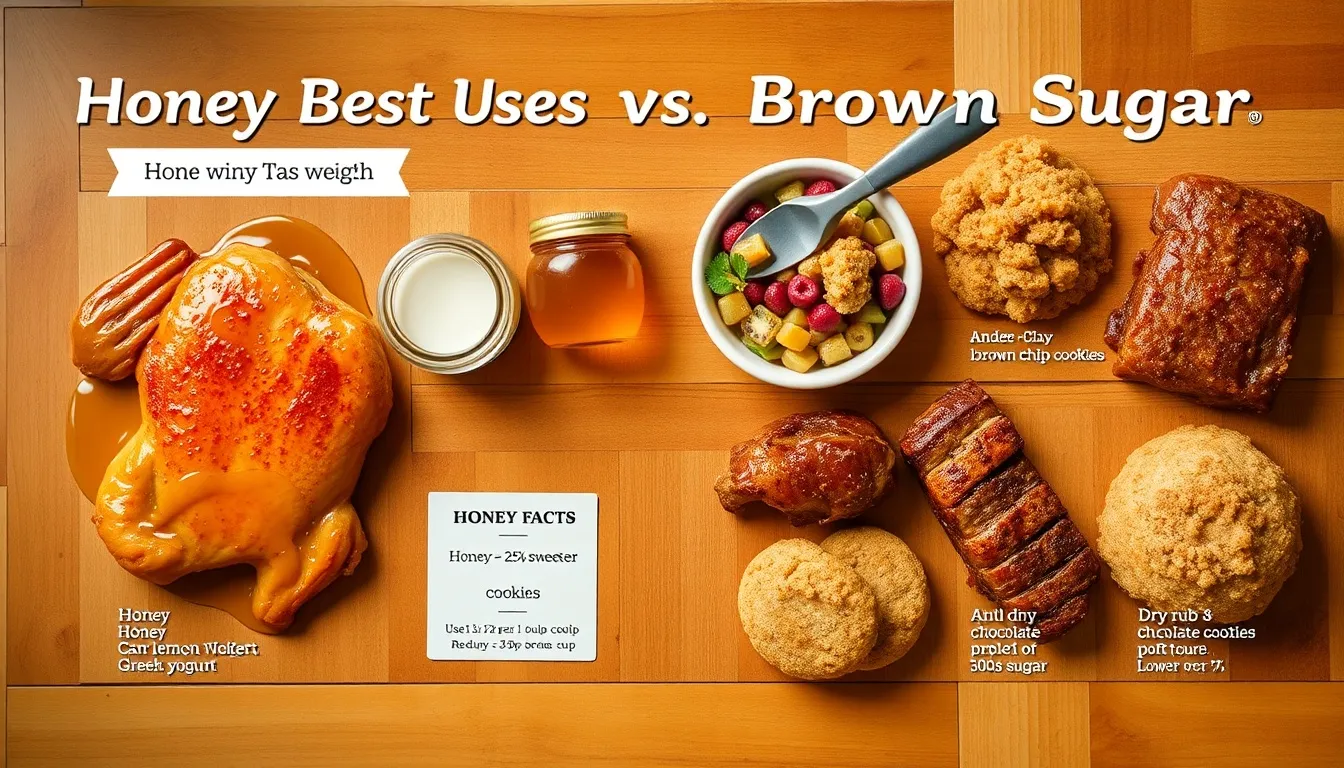
- For a drizzle or drink: Try honey on plain yogurt or stirred into tea, adding a little at a time until the flavor suits you. See choosing honey for tea.
- For a sauce: Choose honey when you want its flavor in a dressing, marinade or glaze. A honey-glaze recipe gives you a starting formula instead of a universal sugar swap.
- For a topping or rub: Keep brown sugar when the recipe calls for a dry, granulated ingredient. Turning it into a honey mixture changes how you apply it, so use a recipe written for that mixture.
Can You Replace Brown Sugar with Honey in Baking?
Sometimes, but use a recipe-specific approach. Honey brings more water than brown sugar in the USDA comparison, so changing the sweetener also changes the ingredient balance. There is no single cup ratio, baking-soda dose or oven-temperature reduction that this guide recommends for every recipe.
King Arthur's liquid-sweetener tests found changes in browning, moisture and texture that differed by recipe. Its honey-sweetened creamed cake worked, with a darker color and different texture: honey does not automatically make creaming recipes fail.
- Cookies and cakes: Start with a tested honey version if spread, crispness or crumb matters. Treat a swap in your usual brown-sugar recipe as a trial, not a guaranteed equivalent.
- A recipe that creams butter and sugar: Keep the specified sugar for the expected result, or follow a tested honey adaptation with its own mixing instructions.
- Your own adaptation: Make a small batch, record ingredient weights and check both color and doneness. Keep notes on the cooled texture before deciding whether to change another ingredient.
Buying and Measuring: Compare What You Use
Compare the actual unit prices on the shelf and the amount your recipe needs. A small honey jar and a large bag of brown sugar cannot be compared by package price alone. Neither a premium honey nor a lower-priced sweetener is automatically the right choice for your food.
If a recipe specifies grams, weigh the ingredient. If it specifies packed brown sugar, use that method rather than a loose spoonful. Our honey weight-and-volume tool can help with honey measurements; it does not make honey and packed brown sugar interchangeable.
Follow the storage directions on the product you bought. For honey-specific pantry questions, see how to store honey and why honey crystallizes. Storage convenience is a separate decision from health or nutrition.
A Practical Way to Choose
For nutrition, compare the amount you will actually eat and count either sweetener with your other added sugars. For flavor, taste the honey and choose light or dark brown sugar to match the recipe. For baking, follow the tested formula before making a substitution.
You can also choose a recipe that uses both ingredients for their respective flavors. That is a culinary choice, not a way to combine promised health benefits. The useful question is what each ingredient does in the food you are making.