Manuka Honey vs Raw Honey
A detailed comparison to help you choose the right honey for your needs.
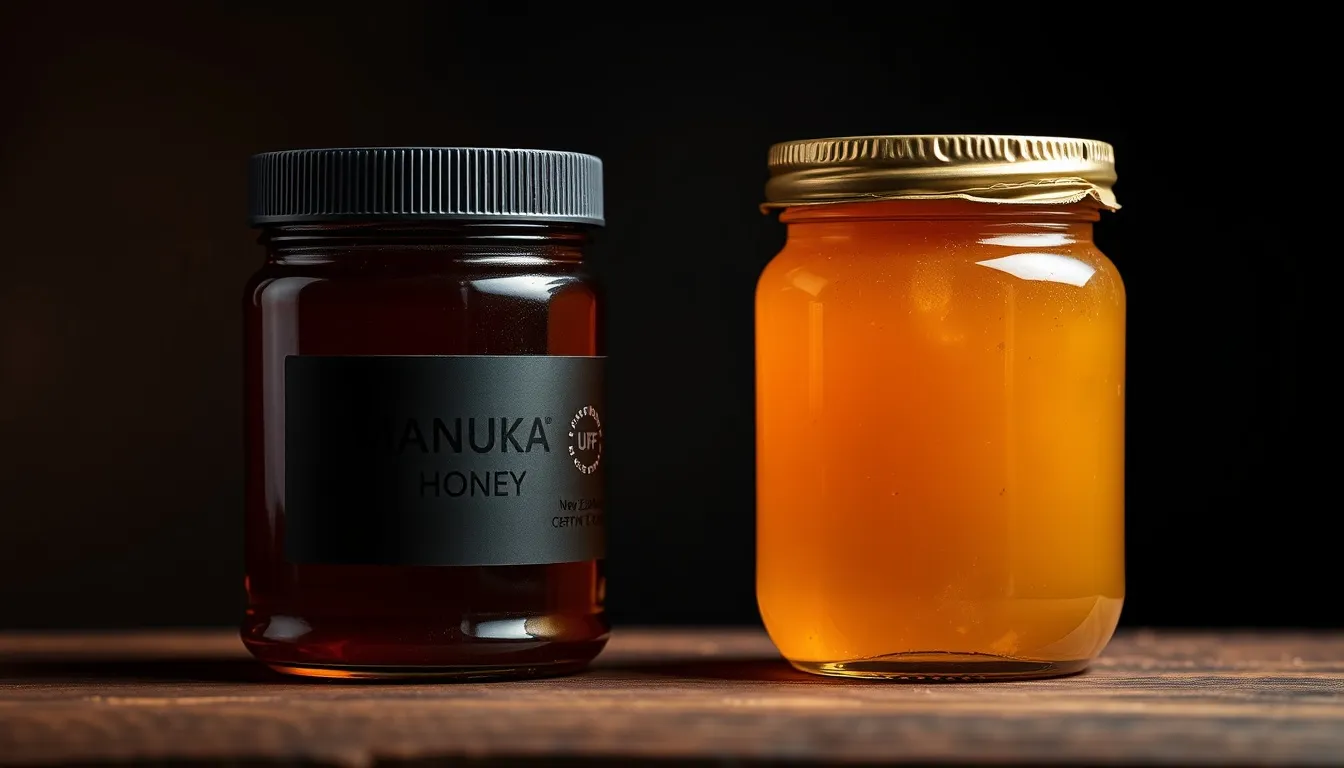
Quick Answer
All authentic manuka honey is raw, but not all raw honey is manuka. Manuka's unique methylglyoxal (MGO) provides catalase-stable antibacterial activity that survives in wound beds and digestive tissue — unlike the hydrogen-peroxide-based activity in other raw honeys, which body fluids rapidly deactivate via catalase. For therapeutic uses backed by clinical evidence — wound care, H. pylori support, resistant acne — talk to a healthcare provider about whether manuka honey and what grade might fit alongside treatment; the $30–80 premium is only worth it for those targeted applications. For antioxidant intake, general immune support, and daily wellness, quality raw buckwheat or local wildflower honey delivers comparable benefits at a fraction of the cost.
At a Glance
Manuka Honey
Earthy, herbal, slightly bitter
Wound care, immune support, digestive health
$30-$80 per jar
New Zealand
Raw Honey
Varies widely, complex and nuanced
Daily health supplement, natural remedies, gourmet eating
$10-$25 per jar
Worldwide
Head-to-Head
Flavor Comparison
Manuka honey has a specific, recognizable flavor profile: earthy, herbal, with a slight medicinal bitterness and creamy, thick texture.
It tastes like New Zealand forest floor in the best possible way. This is one flavor among many in the raw honey world. Raw honey is a vast category encompassing hundreds of varieties, each reflecting its floral source. Raw wildflower honey might taste grassy and fruity. Raw tupelo is buttery and mild. Raw buckwheat is intensely malty. Raw lavender is perfumed and floral. The diversity within "raw honey" is enormous, making direct flavor comparison with a single variety like manuka somewhat misleading. Manuka is one specific expression of raw honey from one specific plant.
Nutrition Comparison
Manuka's defining nutritional advantage is methylglyoxal (MGO), a compound formed from dihydroxyacetone (DHA) in Leptospermum scoparium nectar.
MGO is catalase-stable, meaning it retains antibacterial activity even in wound exudate, diluted body fluids, and digestive tissue — unlike the hydrogen-peroxide-based antibacterial activity in other raw honeys, which body catalase rapidly neutralizes. UMF and MGO grades used in the research range from UMF 10+ (MGO 263+ mg/kg) up to UMF 20–25+ (MGO 829+) for hospital-grade wound-care products — all applied under clinical supervision rather than as a home guideline. Other raw honeys provide their own valuable compounds: enzymes (glucose oxidase, diastase, invertase), bee pollen (proteins, B vitamins, flavonoids), and floral-source antioxidants. Raw buckwheat honey (ORAC 10,000–12,000 µmol TE/100g; Gheldof & Engeseth 2002) matches or exceeds most manuka grades in total antioxidant density, though its H₂O₂-based antibacterial activity is less stable in clinical applications.
Best Use Cases
Manuka honey's MGO content is best known through clinical applications — wound dressing and burn treatment are the settings with the strongest evidence, and those are medical-grade, professionally supervised uses rather than home remedies.
Talk to a healthcare provider about acne or stomach ulcers rather than self-treating with honey. Raw local honey is the better everyday choice for general wellness. Daily consumption may help with seasonal allergies through pollen exposure, supports digestive health through enzyme and prebiotic content, and provides consistent antioxidant intake. Raw honey is also far more practical for culinary use, beauty treatments, and any application requiring frequent or generous use.
Price Comparison
Quality raw honey from local beekeepers costs $10 to $25, while manuka commands $30 to $80 or more.
This three-to-eight-fold price difference means using manuka as your daily honey quickly becomes very expensive. The economic argument for keeping raw local honey as your primary and manuka as your special-purpose honey is compelling.
Our Verdict
Think of manuka as a specialized medicine within the broader raw honey pharmacy. It excels where its unique MGO compound is specifically needed. For everything else, quality raw honey from reputable sources provides outstanding health benefits, diverse flavors, and excellent value. The wise approach is investing in good local raw honey for daily enjoyment and health maintenance, while keeping a jar of certified manuka on hand for situations where its particular therapeutic properties are needed.
Frequently Asked Questions
Is manuka honey always raw?
Can raw buckwheat or wildflower honey match manuka's antibacterial effect?
How do I choose a good raw honey if I'm not buying manuka?
What MGO or UMF rating do I need for therapeutic use?
Is raw local honey better than manuka for seasonal allergies?
Can I use raw honey instead of manuka for minor wound care?
Best Honey For...
More Honey Comparisons
View allRelated Guides
Health Benefits
Nutritional and therapeutic benefits of honey.
Read GuideHoney for Sore Throat
Evidence-based sore throat relief.
Read GuideQuality & Grading
Identify quality honey and spot fakes.
Read GuideRelated Articles
Manuka Honey Benefits: 10 Science-Backed Uses Worth Knowing
10 evidence-based manuka honey benefits — wounds, sore throats, gut health, and skin care. Which UMF/MGO grade to buy.
Read ArticleManuka Honey Grading Systems Explained: UMF vs MGO vs KFactor
UMF vs MGO vs KFactor — manuka honey ratings decoded. Learn what the numbers mean and how to choose authentic manuka.
Read ArticleHoney for Wound Healing: Medical Products and Evidence Limits
Food honey is not a wound dressing. Understand the limits of medical-honey research, product-specific instructions, and when to seek professional care.
Read ArticleHoney for Eye Health: Benefits, Risks, and What Science Says
Can honey benefit eye health? Evidence on antimicrobial and anti-inflammatory properties for dry eyes and conjunctivitis.
Read ArticleRaw Honey vs Manuka Honey: Which Should You Buy?
Raw honey vs manuka honey: compare price, antibacterial strength, taste, and best uses. Is manuka worth the premium?
Read Article