Sidr Honey vs Manuka Honey
A detailed comparison to help you choose the right honey for your needs.
Quick Answer
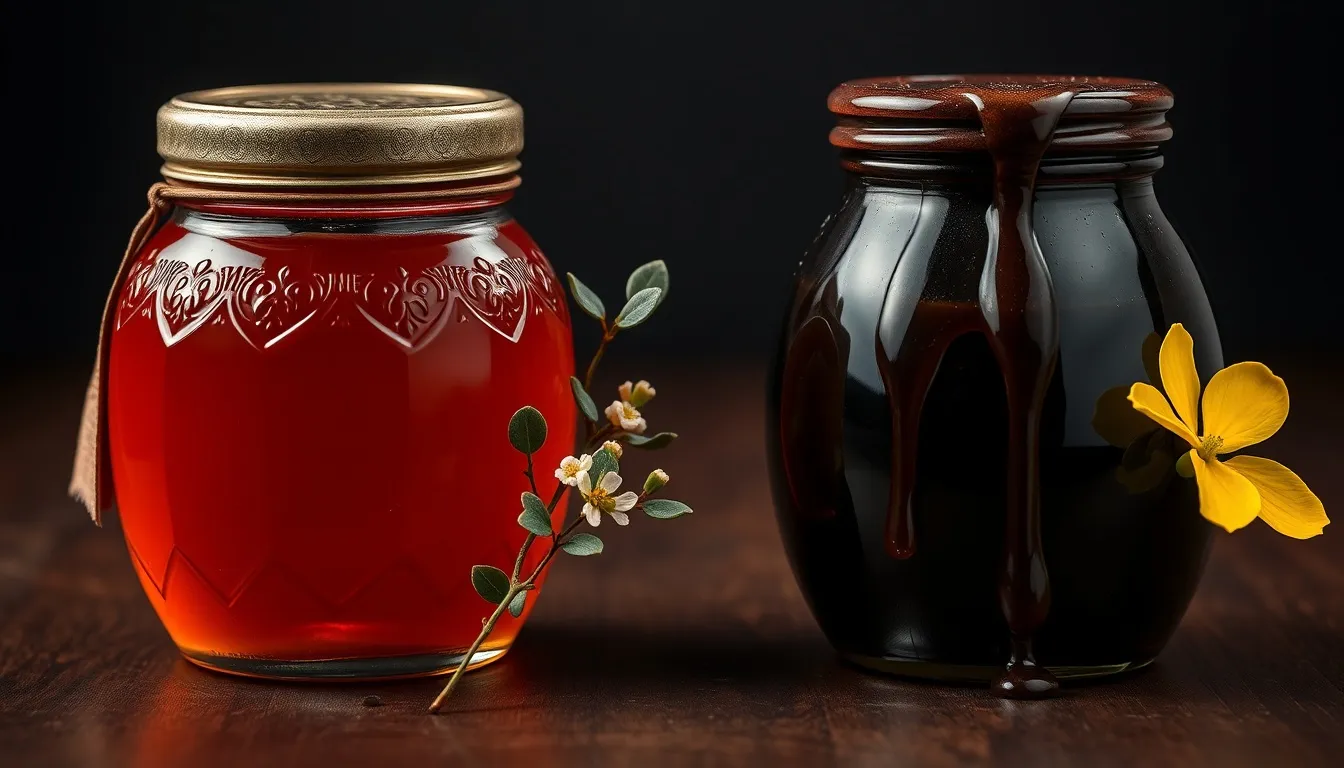
Yemeni sidr is the luxury honey—centuries of Islamic and Ayurvedic medicinal heritage and Do'an Valley butterscotch-caramel flavor that connoisseurs rank among the world's finest, at $50–$200+ per jar. New Zealand manuka is the clinical honey—methylglyoxal (MGO)-driven antibacterial activity with the deepest peer-reviewed wound-care evidence base of any honey, at $30–$80 per jar. Choose sidr for luxury and traditional medicine, manuka for evidence-based health applications.
At a Glance
Sidr Honey
Complex, butterscotch, caramel with medicinal warmth
Traditional medicine, luxury gifting, pure consumption
$50-$200+ per jar
Yemen, Saudi Arabia, Pakistan, India
Manuka Honey
Rich, earthy, slightly bitter with herbal notes
Medicinal use, wound healing, immune support
$30-$80 per jar
New Zealand
Head-to-Head
Flavor Comparison
Sidr honey, particularly from Yemen's Do'an Valley, is considered by many connoisseurs to be the finest-tasting honey in the world.
Its flavor is extraordinarily rich—deep butterscotch and caramel sweetness with warm, almost medicinal undertones that feel ancient and sacred. The texture is thick and luxurious, coating the palate with layers of complexity. Each spoonful reveals new notes: dates, herbs, warm spices. It is honey as an experience rather than a product. Manuka honey is less refined on the palate. Its earthy, herbal flavor with slight bitterness is utilitarian rather than luxurious. Higher UMF ratings intensify the medicinal taste. Manuka is respected for what it does, while sidr is revered for how it tastes.
Nutrition Comparison
Sidr honey has been used in traditional Islamic and Ayurvedic medicine for centuries, valued for liver health, digestive support, wound healing, and general vitality.
Preliminary modern research shows promising antibacterial, antifungal, and anti-inflammatory activity, though clinical studies are far less extensive than those for manuka. The Sidr tree (Ziziphus spina-christi) has a long history in herbal pharmacology. Manuka honey has the strongest scientific backing of any honey. Its unique MGO content provides clinically validated antibacterial activity. UMF-rated manuka has been studied for wound healing, digestive health (H. pylori), oral health, and skin care with published results in peer-reviewed journals.
Best Use Cases
Sidr honey is traditionally consumed pure as a health tonic, and has a long history in traditional medicine for liver health, fertility, and general vitality — claims that preliminary research has explored but not confirmed.
In the kitchen, its extraordinary flavor makes it a standalone luxury—drizzle it over premium desserts or enjoy it with fresh bread and butter. Manuka honey is often taken as a daily spoonful for general wellness; skin conditions and digestive complaints should be directed by a healthcare provider. Medical-grade manuka is used in clinical wound care products under professional supervision.
Price Comparison
Sidr honey is the most expensive honey in the world, with premium Yemeni Do'an Valley sidr costing $50 to $200 or more per jar.
Rarity, challenging harvesting in remote mountain regions, and centuries of prestige drive the price. Manuka honey at $30 to $80 is expensive by normal standards but a relative bargain compared to authentic sidr. Both honeys are frequently counterfeited, making trusted sourcing essential.
Our Verdict
These are the crown jewels of the honey world for different reasons. Sidr honey is the luxury experience—centuries of tradition, extraordinary flavor, and medicinal heritage that feels timeless. Manuka honey is the modern medicinal champion—clinical research validates its health claims with scientific rigor. If budget allows, experiencing both is a honey education in itself. For evidence-based health benefits, manuka is the safer bet. For sheer sensory pleasure and cultural richness, sidr is unmatched.
Frequently Asked Questions
Why is Yemeni Do'an Valley sidr the world's most expensive honey?
Is sidr honey more antibacterial than manuka?
What does sidr honey taste like?
How can I tell authentic sidr honey from fake?
Can sidr honey be taken daily like manuka?
Does sidr honey crystallize?
Best Honey For...
More Honey Comparisons
View allRelated Guides
Health Benefits
Nutritional and therapeutic benefits of honey.
Read GuideHoney for Sore Throat
Evidence-based sore throat relief.
Read GuideQuality & Grading
Identify quality honey and spot fakes.
Read GuideRelated Articles
Manuka Honey Benefits: 10 Science-Backed Uses Worth Knowing
10 evidence-based manuka honey benefits — wounds, sore throats, gut health, and skin care. Which UMF/MGO grade to buy.
Read ArticleManuka Honey Grading Systems Explained: UMF vs MGO vs KFactor
UMF vs MGO vs KFactor — manuka honey ratings decoded. Learn what the numbers mean and how to choose authentic manuka.
Read ArticleHoney for Wound Healing: Medical Products and Evidence Limits
Food honey is not a wound dressing. Understand the limits of medical-honey research, product-specific instructions, and when to seek professional care.
Read ArticleHoney for Eye Health: Benefits, Risks, and What Science Says
Can honey benefit eye health? Evidence on antimicrobial and anti-inflammatory properties for dry eyes and conjunctivitis.
Read ArticleRaw Honey vs Manuka Honey: Which Should You Buy?
Raw honey vs manuka honey: compare price, antibacterial strength, taste, and best uses. Is manuka worth the premium?
Read Article