Sourwood Honey vs Tupelo Honey
A detailed comparison to help you choose the right honey for your needs.
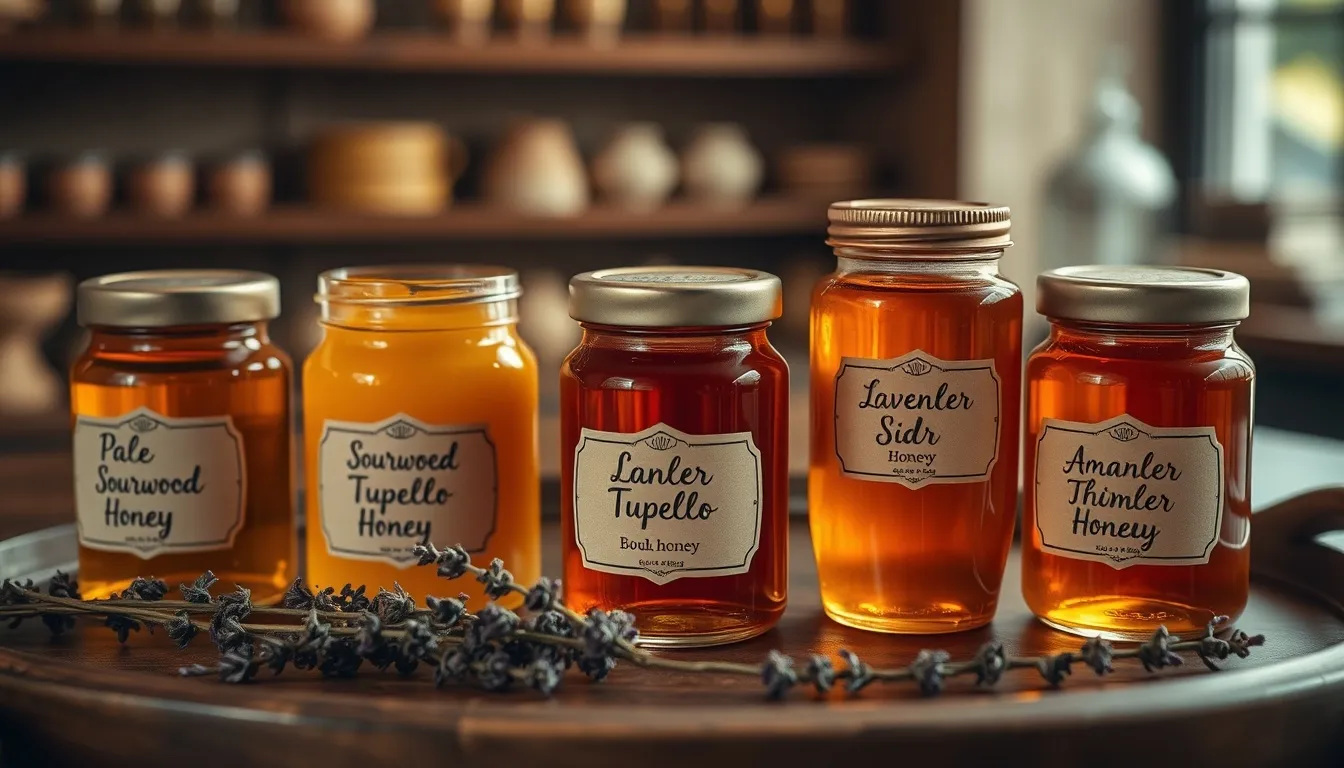
Quick Answer
Sourwood delivers complex caramel-spice depth from Appalachian forests (F/G ≈ 1.10, 3–6 month crystallization); tupelo offers legendary buttery smoothness from Florida's Apalachicola swamps and the highest fructose-to-glucose ratio of any commercial honey (F/G ≈ 1.65, White 1975) that keeps it pourable for 18–24+ months. Both are America's most prized premium honeys at $18–$45 per jar—choose sourwood for bold complexity, tupelo for silky elegance and exceptional shelf stability.
At a Glance
Sourwood Honey
Complex caramel, buttery, mildly spicy with anise finish
Biscuits, fine dining, cheese pairing, gifts
$18-$40 per jar
Appalachian Mountains (North Carolina, Georgia, Tennessee)
Tupelo Honey
Buttery, floral, cinnamon-like warmth, very smooth
Drizzling, pancakes, gourmet gifts, diabetic-friendly sweetener
$20-$45 per jar
Florida panhandle, Georgia (Apalachicola River basin)
Head-to-Head
Flavor Comparison
Sourwood honey is often called the finest honey produced in America, and tasting it explains why.
The flavor unfolds in layers: an initial caramel sweetness gives way to buttery richness, then a mild spiciness with hints of anise and gingerbread on the finish. It is complex and sophisticated, rewarding slow, thoughtful tasting. Genuine Appalachian sourwood is a rare experience that converts many honey skeptics. Tupelo honey is equally legendary but with a different personality. It is extraordinarily smooth and buttery, almost silky on the tongue. The flavor is delicate and refined—floral with warm cinnamon undertones and a clean, lingering finish. Tupelo never feels heavy or cloying. Its texture is part of its appeal, feeling lighter and more elegant than most honeys.
Nutrition Comparison
The two honeys split cleanly on a single chemical measurement: fructose-to-glucose ratio (F/G).
Pure tupelo (Nyssa ogeche) measures F/G ≈ 1.65 (44.5% fructose, 26.9% glucose) in the foundational USDA dataset compiled by Jonathan W. White Jr. (1975) — the highest fructose dominance of any widely available commercial honey. Sourwood (Oxydendrum arboreum) measures F/G ≈ 1.10 (39.7% fructose, 36.1% glucose) in the same dataset — fructose-leaning but far from tupelo's extreme. The downstream consequences are predictable: tupelo's published glycemic index is approximately 44 (vs ~69 for common clover honey per Ischayek & Kern 2006, and ~65 for table sugar), and its glucose fraction is too low to nucleate crystallization for 18–24+ months under typical pantry conditions. Sourwood's more balanced sugar profile gives it a moderate GI and the typical 3–6 month crystallization onset of fine-grained Appalachian honeys. On phenolic content, both honeys are amber-class and carry meaningful polyphenol loads — Beretta et al. (2005, J. Pharm. Biomed. Anal.) documented sourwood's phenolic acid profile and antioxidant activity comparable to other premium American monoflorals, though peer-reviewed sourwood-specific antimicrobial work remains limited compared to manuka or Greek thyme. Both deliver enzymatic content (diastase, glucose oxidase) when raw and unheated. (For the full F/G dataset across 16 varieties, see our fructose-to-glucose ratio index.)
Best Use Cases
Sourwood honey is best savored simply—on warm biscuits, drizzled over sharp cheddar, or stirred into high-quality tea.
It shines in applications where its layered complexity can be appreciated without competition. Southern biscuit traditions consider sourwood the ultimate pairing. Tupelo honey is perfect for drizzling over pancakes, waffles, and oatmeal where its silky texture can be enjoyed. Its clean sweetness makes it excellent in beverages and cocktails. It is also a treasured gift item—a jar of authentic tupelo honey is a Southern delicacy.
Price Comparison
Both honeys are premium-priced.
Sourwood runs $18 to $40 per jar, with prices increasing as Appalachian sourwood tree populations face pressure from development and climate change. Tupelo honey costs $20 to $45, reflecting the challenging swamp harvesting conditions and limited production window (tupelo trees bloom for only two to three weeks). Both are investment honeys worth every penny.
Our Verdict
Choosing between sourwood and tupelo is like choosing between two masterpieces. Sourwood offers bold, layered complexity with Southern mountain soul—a honey that tells a story with every spoonful. Tupelo provides unmatched smoothness and elegance, a liquid gold that stays perfectly pourable. Serious honey enthusiasts should experience both. If forced to choose, pick sourwood for big flavor moments and tupelo for refined drizzling occasions.
Frequently Asked Questions
Why are sourwood and tupelo honey so expensive?
Does tupelo honey really never crystallize?
How can I verify authentic sourwood or tupelo honey?
What does sourwood honey taste like?
Which is better for blood sugar, sourwood or tupelo honey?
What is the best way to use sourwood vs tupelo honey in the kitchen?
Best Honey For...
More Honey Comparisons
View allRelated Guides
Seasonal Honey Guide
How seasons affect honey production.
Read GuideBuckwheat Honey Guide
Antioxidants, cough relief, dark honey benefits, athletic performance, and ORAC rating.
Read GuideHow Bees Make Honey
The journey from flower to jar.
Read GuideRelated Articles
Types of Honey: A Complete Guide to 20+ Varieties
Guide to 20+ honey varieties — clover, manuka, buckwheat, wildflower, and more. How floral source affects flavor and use.
Read ArticleThyme Honey: Taste, Colour, Origins and Price
Thyme honey is medium amber and herbal. Five catalog jars from Greece, Spain, Cyprus and New Zealand, jar prices, Pfund colour class, and how to spot a blend.
Read ArticleSidr Honey Benefits: Why This Ancient Honey Commands Premium Prices
Sidr honey (jujube) benefits: powerful antimicrobial action, wound healing, and immune support. Authenticity buying guide.
Read Article