Honey vs Maple Syrup
Both are beloved natural sweeteners, but they differ in nutrition, flavor, and health benefits. Honey offers antimicrobial compounds and enormous floral variety, while maple syrup delivers superior minerals and a lower glycemic index.
Last updated:
Honey and maple syrup are both excellent natural sweeteners with distinct advantages. Honey offers antimicrobial properties, diverse floral flavors, and well-studied cough relief. Maple syrup (GI ~54) is lower-GI than most common honeys — clover honey measures ~69, wildflower honey ~65 — though specialty honeys like acacia honey (GI ~32) outperform maple syrup on blood sugar. Maple syrup also provides more minerals (especially manganese) and dissolves better in cold drinks. Use honey for marinades, tea, and health remedies; maple syrup for baking, pancakes, and vegan-friendly sweetening.
Edited by Sam French · Raw Honey Guide Editorial Team
Source reviewed against primary literature and official guidance where available. Health content is educational, not medical advice, and does not replace a licensed clinician.
At a Glance
How Do They Compare Nutritionally?
Honey and maple syrup are both natural sweeteners, but their nutritional profiles differ in important ways. A tablespoon of honey contains approximately 64 calories compared to maple syrup's 52 calories per tablespoon. However, honey is roughly 1.5 times sweeter than maple syrup, so you typically use less. Maple syrup stands out for its mineral content — it is an excellent source of manganese (providing about 33% of your daily value per tablespoon) and a good source of riboflavin, zinc, magnesium, calcium, and potassium. Honey, by contrast, contains smaller amounts of a wider range of micronutrients, including B vitamins, iron, and phosphorus. Where honey truly excels is in its bioactive compounds: raw honey contains over 200 substances including enzymes like glucose oxidase, amino acids, and a diverse array of polyphenol antioxidants. Maple syrup also contains antioxidants — researchers have identified over 65 antioxidant compounds in it, including quebecol, a compound unique to maple syrup formed during the boiling process. Both sweeteners offer nutritional advantages over refined sugar, which provides zero micronutrients. The choice between them often comes down to which specific nutrients you want more of: manganese and zinc from maple syrup, or enzymes and antimicrobial compounds from honey.
Which Has a Lower Glycemic Index?
The glycemic index (GI) is a key factor for anyone watching their blood sugar. Pure maple syrup has a GI of approximately 54, placing it in the low-to-moderate range. Honey's GI varies enormously by floral source — from ~32 (acacia honey) to ~83 (buckwheat honey). Critically, the most common US honey — clover honey — has a measured GI of ~69 (Ischayek & Kern 2006), higher than both maple syrup (54) and table sugar (~65). Wildflower honey averages ~65, roughly equal to sugar. This means maple syrup causes a less dramatic blood sugar spike than most common honeys, though specialty honeys like acacia honey (GI ~32) and tupelo honey (~45) beat both maple syrup and sugar by a wide margin. The driver is sugar composition: honey's fructose-to-glucose ratio (F/G) varies by variety from ~0.9 (chestnut honey) to ~1.47 (acacia honey). High-fructose varieties produce lower GI because fructose is metabolized by the liver rather than entering the bloodstream directly. For people with diabetes or insulin resistance, both sweeteners should be consumed in moderation — and variety selection is critical for honey users. Acacia honey or pure maple syrup are the best options among common natural sweeteners for blood sugar management.
How Do They Differ in Taste and Cooking?
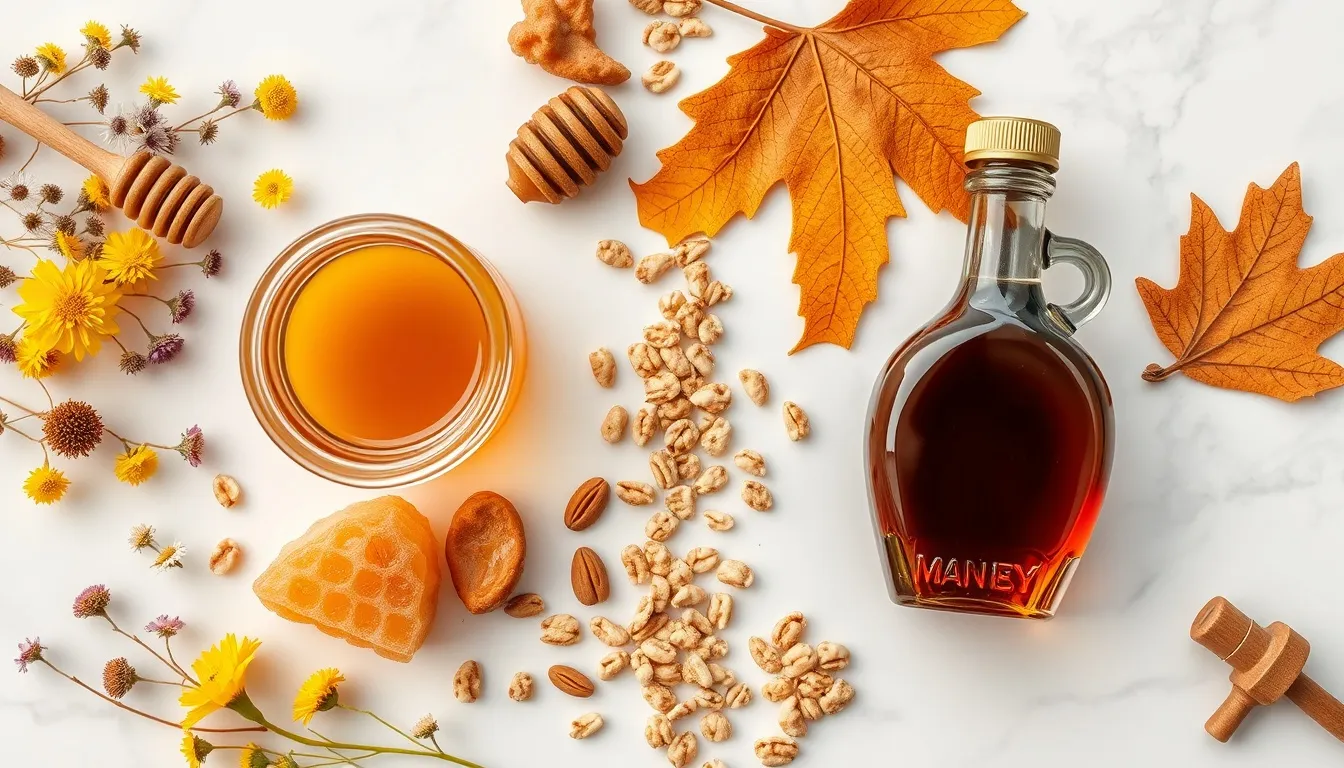
Flavor is where these two sweeteners diverge most dramatically. Maple syrup has a distinctive caramel-like, woodsy flavor with notes of vanilla and toffee. Its taste is consistent across grades, though darker grades (Grade A Dark or Very Dark) have more intense, robust maple flavor. Honey's flavor varies enormously depending on the floral source — from the mild, clean sweetness of acacia honey to the bold, molasses-like intensity of buckwheat honey. Wildflower honey offers complex multi-floral notes, while clover honey provides a neutral, crowd-pleasing profile. Orange blossom honey brings citrus brightness, and sourwood honey delivers sophisticated spice notes. This variety makes honey more versatile as a flavor ingredient, but maple syrup's consistency makes it more predictable in recipes. For baking substitutions, use three-quarters cup of maple syrup for every cup of sugar, reduce other liquids by about 3 tablespoons, and lower the oven temperature by 25 degrees Fahrenheit. When substituting maple syrup for honey (or vice versa), use a 1:1 ratio but expect flavor differences. Maple syrup works exceptionally well in baked goods, pancakes, oatmeal, glazed vegetables, and salad dressings. Honey is the better choice for tea, marinades, meat glazes, and cheese pairings. In cold applications, keep in mind that honey is thicker and stickier than maple syrup. For cocktails and cold beverages, maple syrup dissolves more easily. One practical tip: if a recipe calls for maple syrup and you only have honey, the dish will be sweeter, so reduce the amount by about a quarter.
Which Offers Greater Health Benefits?
Both honey and maple syrup offer health benefits beyond basic nutrition, but in different ways. Honey has been used medicinally for thousands of years and has the most robust body of clinical research. Its well-documented benefits include antimicrobial and antibacterial properties (thanks to hydrogen peroxide production and low pH), traditional and researched use as a cough suppressant, wound-healing properties (particularly Manuka honey), and prebiotic effects that support gut health. Honey's antioxidant content varies significantly by variety — buckwheat honey contains 3-9x more antioxidants than clover honey, while wildflower honey provides diverse polyphenols from multiple floral sources. Eucalyptus honey offers respiratory benefits, and chestnut honey provides exceptional mineral content. Maple syrup's health benefits are less extensively studied but still noteworthy. Its unique antioxidant compound quebecol has shown anti-inflammatory properties in laboratory studies. Maple syrup contains inulin, a prebiotic fiber that supports beneficial gut bacteria. Research from the University of Rhode Island identified over 65 polyphenol antioxidants in maple syrup, several of which may have anti-cancer and anti-diabetic properties. The manganese in maple syrup plays essential roles in bone health, metabolism, and wound healing. For immune support and therapeutic use, honey — especially raw, unprocessed wildflower honey or therapeutic Manuka honey — has a clear advantage due to its antimicrobial properties and the depth of research supporting its use. For mineral supplementation (particularly manganese and zinc), maple syrup is the stronger choice.

What About Sustainability and Production?
Environmental sustainability is an increasingly important factor in food choices, and both honey and maple syrup have compelling environmental stories. Maple syrup production is inherently sustainable — it involves tapping living sugar maple trees that continue to grow and absorb carbon dioxide for decades or even centuries. A properly tapped tree can produce sap for over 100 years without damage. Maple forests also support biodiversity and protect watersheds. However, maple syrup production is geographically limited to northeastern North America, which means imported maple syrup carries a significant carbon footprint for consumers elsewhere. Honey production supports pollinator health, which is critical for global food security — bees pollinate approximately 75% of the world's flowering plants and about 35% of food crops. Beekeeping incentivizes the preservation of wildflower meadows and diverse landscapes. However, commercial beekeeping practices have been criticized for potentially displacing native pollinators and contributing to disease transmission among bee populations. Both sweeteners are far more sustainable than refined cane sugar, which often involves deforestation, heavy pesticide use, and water-intensive processing. For the most environmentally conscious choice, buy local whenever possible — local honey from small-scale beekeepers or locally produced maple syrup from sustainably managed sugarbushes.
The Verdict
Both honey and maple syrup deserve a place in your pantry. Choose honey for antimicrobial benefits, cough remedies, cheese pairings, and therapeutic properties. Choose maple syrup for superior minerals, consistent low GI, baked goods, and vegan-friendly sweetening. The American Heart Association's limit of 6-9 teaspoons of added sugar per day applies to both equally.
Browse All HoneysFrequently Asked Questions
Is honey or maple syrup healthier?
Both offer health benefits that refined sugar lacks. Honey provides antimicrobial properties, enzymes, and diverse antioxidants. Maple syrup is richer in minerals like manganese and zinc. Choose based on your specific nutritional needs.
Can I substitute maple syrup for honey in recipes?
Yes, use a 1:1 ratio when substituting maple syrup for honey, but reduce the amount by about 25% since honey is sweeter. Expect flavor differences — maple syrup adds caramel-woodsy notes while honey adds floral sweetness.
Which has fewer calories, honey or maple syrup?
Maple syrup has about 52 calories per tablespoon compared to honey's 64 calories. However, honey is about 1.5 times sweeter, so you may use less to achieve the same sweetness level.
Is maple syrup better than honey for diabetics?
Maple syrup (GI ~54) is lower-GI than most common honeys — clover honey, the most widely sold variety, measures ~69 (Ischayek & Kern 2006). However, specialty honeys like acacia honey (GI ~32) and tupelo honey (~45) beat maple syrup by a wide margin. For diabetics, acacia honey is the best honey choice; maple syrup is a solid general-purpose option. Both raise blood sugar and should be consumed in moderation.
Get the Honey Buyer's Cheat Sheet (free PDF)
16 varieties on one page — color, flavor, best use and what a fair price looks like — from the 304 honeys we track.
Related Guides
Honey vs Sugar
Compare calories, nutrients, and GI.
Read GuideHoney Nutrition Facts
USDA reference values and label-reading context.
Read GuideCooking with Honey
Tips for baking, glazes, and pairings.
Read GuideRelated Articles
Honey vs Maple Syrup: Nutrition, Taste, and Substitutions
Compare honey and pure maple syrup by tablespoon: sugar, calories, flavor, and cooking uses, with measured recipe swaps and baking caveats.
Read ArticleIs Honey Better Than Sugar? The Complete Health Comparison
Honey vs sugar: compare nutrition, glycemic impact, antioxidants, and clinical evidence. When honey wins — and when not.
Read Article