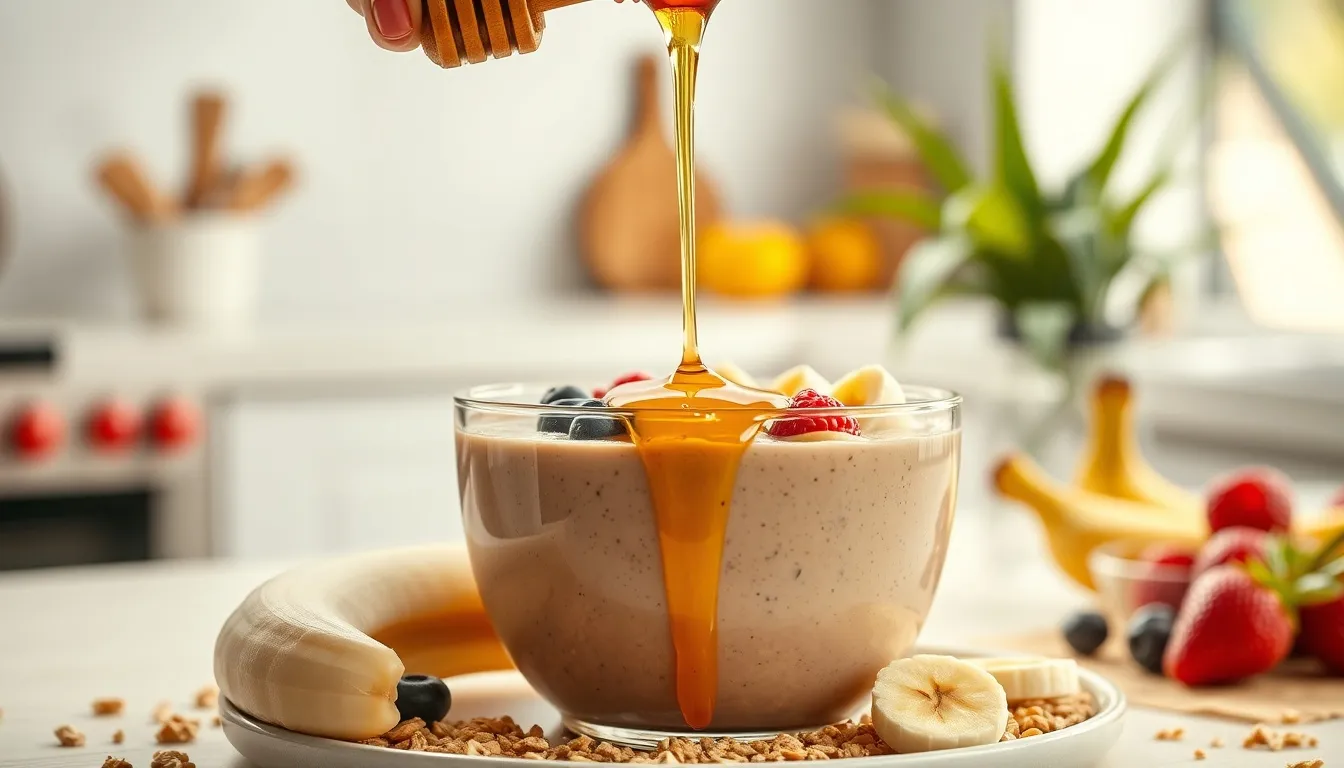
Best Honey for Weight Loss

Which honey varieties support weight management goals? Low-GI options, portion guidance, and evidence-based recommendations for using honey as part of a healthy diet.

Best Honey for Weight Loss — honey varieties and usage

Quick Answer

Acacia honey (GI ~32–35) is the top choice for weight management — its low glycemic index causes the smallest insulin spike of any common honey. Tupelo honey (GI ~44, Arcot & Brand-Miller 2005) and sage honey are also effective low-GI options. Wildflower honey offers the broadest prebiotic diversity for appetite hormone regulation. Manuka honey supports gut microbiome composition linked to satiety — its prebiotic oligosaccharides feed Bifidobacterium and Lactobacillus strains that produce short-chain fatty acids regulating GLP-1 and PYY. Portion control matters most: limit to 1-2 tablespoons daily as a sugar replacement, not an addition.

What to Look For

Prioritize low-GI honey varieties that minimize insulin spikes and fat storage signaling. Raw honey is better than processed because it retains prebiotic oligosaccharides (FOS and GOS) that feed beneficial gut bacteria, producing short-chain fatty acids that regulate appetite hormones GLP-1 and PYY. Choose liquid honey for accurate portion measuring. Remember: honey supports weight management when it replaces refined sugar, not when added on top of existing sugar intake.

Top Recommendations

#1

Acacia Honey

The lowest glycemic index of common honeys (GI 32-35), meaning the smallest insulin response and least fat-storage signaling. Its high fructose-to-glucose ratio provides sustained energy without the blood sugar crash that triggers hunger. Mild flavor makes it an easy sugar substitute in beverages and recipes.

$10-$25 per jar

Hungarian or Italian acacia honey is authentic. Its water-white color and liquid consistency make it easy to measure precise portions.

#2

Tupelo Honey

Low GI (~44, Arcot & Brand-Miller 2005) with the highest fructose-to-glucose ratio of any common honey (~1.65:1, White 1975). Never crystallizes, making it easy to portion accurately. The low glycemic impact helps maintain steady blood sugar levels between meals.

$18-$40 per jar

Source from Florida or Georgia beekeepers. More expensive but the low-GI benefit is worth it for daily use. Verify authenticity—true tupelo stays permanently liquid.

#3

Wildflower Honey

Offers the broadest prebiotic diversity from multiple floral sources, supporting a wider range of beneficial gut bacteria. The diverse polyphenol profile may enhance metabolic health. Moderate GI (45-64) and widely available at reasonable prices for daily use.

$8-$18 per jar

Local raw wildflower honey offers the best value for daily use. Buy in larger containers (2+ lbs) to reduce cost per serving.

#4

Sage Honey

Contains rosmarinic acid, which has been studied for alpha-glucosidase inhibition—potentially slowing carbohydrate absorption. Lower GI (35-45) similar to acacia, with a mild herbal flavor that works well as a general sweetener replacement.

$12-$28 per jar

California sage honey (white sage or black sage) is the most common and authentic source.

#5

Manuka Honey

The gut microbiome angle: Manuka's prebiotic oligosaccharides (including MGO-resistant fractions) selectively feed Bifidobacterium and Lactobacillus strains that produce short-chain fatty acids. These SCFAs stimulate GLP-1 and PYY satiety hormones via gut L-cells, reducing appetite. Manuka's anti-inflammatory polyphenols may also reduce metabolic inflammation linked to visceral fat accumulation. GI is moderate (~50–60) — the gut flora benefit is the primary weight-management mechanism here.

$25-$50 per jar

UMF 5-10 is sufficient for gut flora benefits — the prebiotic and microbiome-modulation effects are consistent across UMF tiers. Use in warm (not hot) water or yogurt to preserve oligosaccharides; avoid temperatures above 40°C.

How to Use

Replace refined sugar with honey at a 1:0.75 ratio (3/4 tablespoon honey per 1 tablespoon sugar)—honey is sweeter, so you need less. Limit total intake to 1-2 tablespoons daily. The most effective strategies: (1) Swap sugar in morning tea or coffee. (2) Use as the sole sweetener in oatmeal or yogurt instead of sugar or flavored syrups. (3) Take one tablespoon in warm water 20-30 minutes before meals to support gentle appetite regulation. (4) Use in salad dressings instead of sugar to maintain sweetness with lower glycemic impact. Track your total daily sweetener intake—honey is lower GI than sugar but still caloric at 64 calories per tablespoon.

What to Avoid

Do not treat honey as a free food or weight loss supplement—it still contains 64 calories per tablespoon. Avoid adding honey on top of existing sugar intake; it must replace sugar to provide any weight benefit. Do not consume more than 2 tablespoons daily for weight management purposes. Avoid high-GI varieties like clover (GI 55-69) if blood sugar control is your primary concern. Do not believe claims that honey "burns fat" or "boosts metabolism dramatically"—the benefits are modest and work alongside a healthy diet, not as a magic solution.

Frequently Asked Questions

Can honey really help with weight loss?
Honey can support weight management when used as a replacement for refined sugar, not as an addition. A 2022 Nutrition Reviews meta-analysis of 18 clinical trials found that honey consumption was associated with lower body weight, BMI, and fasting blood glucose compared to sugar. The mechanisms include lower glycemic impact (especially acacia and tupelo varieties), prebiotic effects that regulate appetite hormones, and polyphenols that modulate fat metabolism. However, the effects are modest—honey is a healthier sweetener choice, not a weight loss supplement.
How much honey should I eat per day for weight loss?
Limit to 1-2 tablespoons (15-30 mL) daily, totaling 64-128 calories. This amount provides enough prebiotics and polyphenols for metabolic benefits while staying within reasonable caloric limits. The key is replacing existing sugar intake, not adding calories. The WHO and AHA recommend limiting total added sugars to 6-9 teaspoons daily—1-2 tablespoons of honey fits within this guideline.
Is honey water good for weight loss?
Warm honey water (1 tablespoon in 8-10 oz warm water) before meals may help with hydration and gentle appetite regulation. However, it is not a detox or fat-burning drink—those claims are not supported by evidence. The modest benefits come from replacing higher-calorie beverages, improving hydration, and the prebiotic effects of honey oligosaccharides on gut bacteria that regulate satiety hormones.
Can honey reduce belly fat?
Honey alone does not spot-reduce belly fat — no single food targets abdominal adipose tissue. However, replacing refined sugar (GI 65) with low-GI honey (acacia GI ~35, tupelo GI ~44) reduces insulin spikes that drive visceral fat storage. A 2011 study in the Journal of Medicinal Food found honey-fed subjects accumulated less body fat than sucrose-fed subjects at matched caloric intake. The practical mechanism: honey is sweeter than sugar, so you use about 25% less volume (1 tablespoon honey replaces ~1.33 tablespoons sugar), reducing total calories. Combined with prebiotic effects that lower metabolic inflammation linked to visceral fat, low-GI honey is a useful substitution tool — not a shortcut.
Is honey safe on a low-carb or keto diet?
Standard low-carb diets (≤100–150g carbs/day) can accommodate 1-2 teaspoons of low-GI honey without disruption. Strict keto (≤20–50g net carbs/day) leaves little room: one tablespoon of honey contains ~17g natural sugars, representing 34–85% of a strict keto daily carb limit. For keto, honey should be eliminated or limited to a few drops for flavor only. For general low-carb weight loss, acacia or tupelo honey — used strictly to replace sugar in beverages and recipes — can fit within the diet framework. Always track carbohydrate totals.
Which honey is best for gut health and weight management together?
Wildflower honey provides the broadest prebiotic diversity from multiple floral sources, feeding a wider range of beneficial gut bacteria simultaneously. For more targeted gut modulation, manuka honey's prebiotic oligosaccharides selectively increase Bifidobacterium and Lactobacillus populations that produce short-chain fatty acids linked to satiety hormone regulation (GLP-1, PYY). Both approaches support the gut-brain appetite axis. For maximum combined effect, use raw local wildflower honey daily and reserve manuka honey for periods when you want active microbiome support — after antibiotics, travel disruption, or digestive stress.