The Short Answer: No Universal Winner
There is no evidence-based country winner. The best jar for you depends on flavor and use; the best-supported choice depends on what its label, producer records, and batch evidence can actually establish. A country reputation alone cannot prove botanical source, protected status, processing, authenticity, quality, flavor, or health effects.
Use this four-part rubric before comparing origins. Keep evidence and preference separate: records can support a label claim, while taste tells you whether the jar suits you.
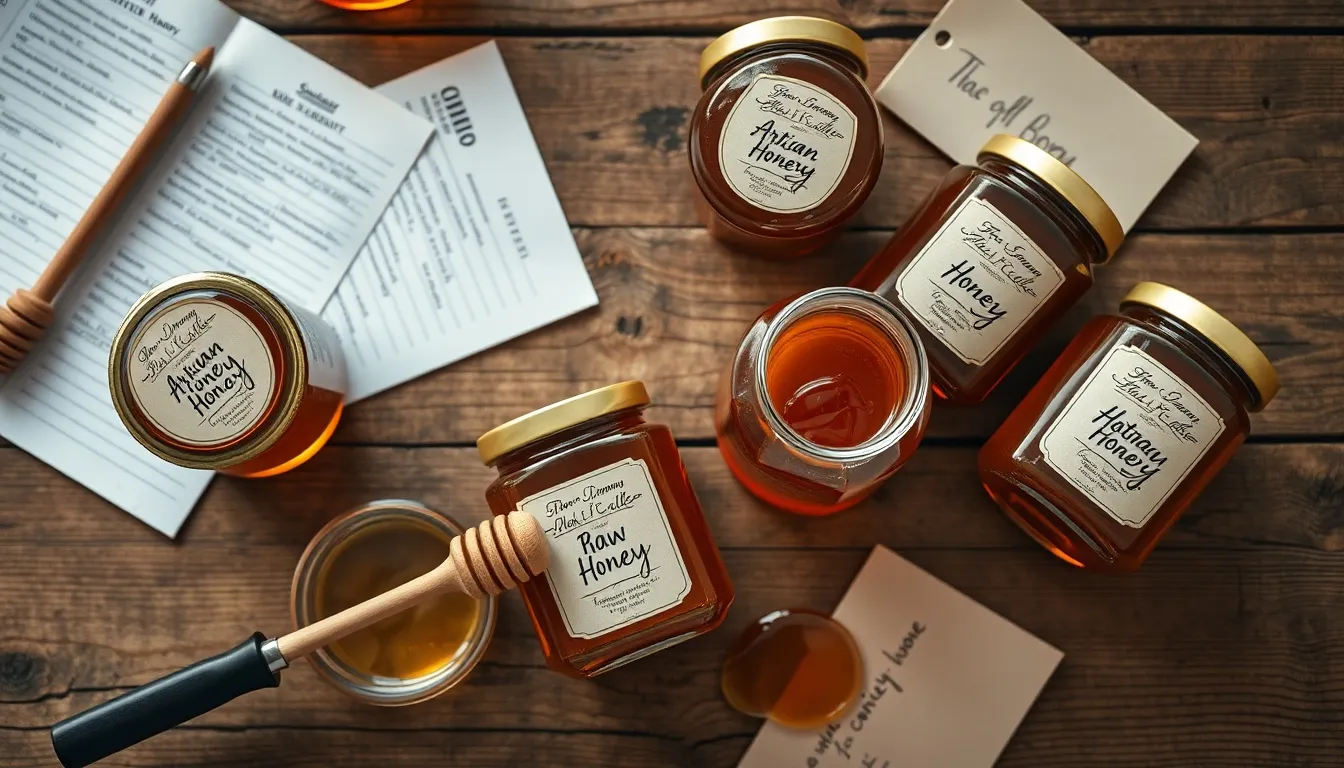
- Identity — Read the statement of identity, ingredient list, country-of-origin wording, and floral claim literally. “Honey,” “blend,” a protected name, and a national flag are different claims.
- Traceability — Look for a named producer or packer plus a lot or batch code. Evidence tied to the exact jar is stronger than a country reputation or generic marketing story.
- Verifiable claims — Check protected names, organic certification, and export definitions in the responsible official registry. For a laboratory claim, look for the sample, method, date, result, and batch match.
- Preference fit — Compare flavor, texture, and intensity only after the label evidence is clear. Sensory notes help you choose; they do not authenticate a jar.
12-Origin Comparison: Labels, Flavor, and Evidence
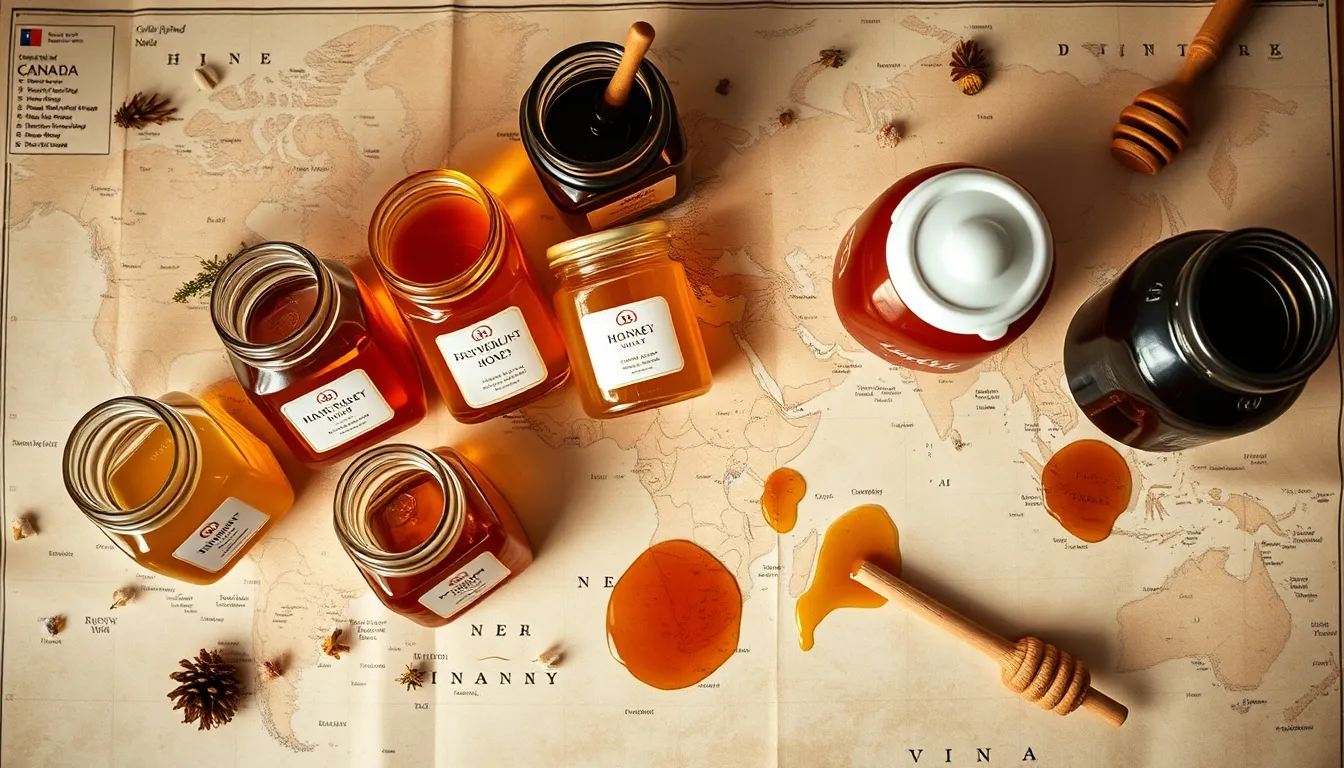
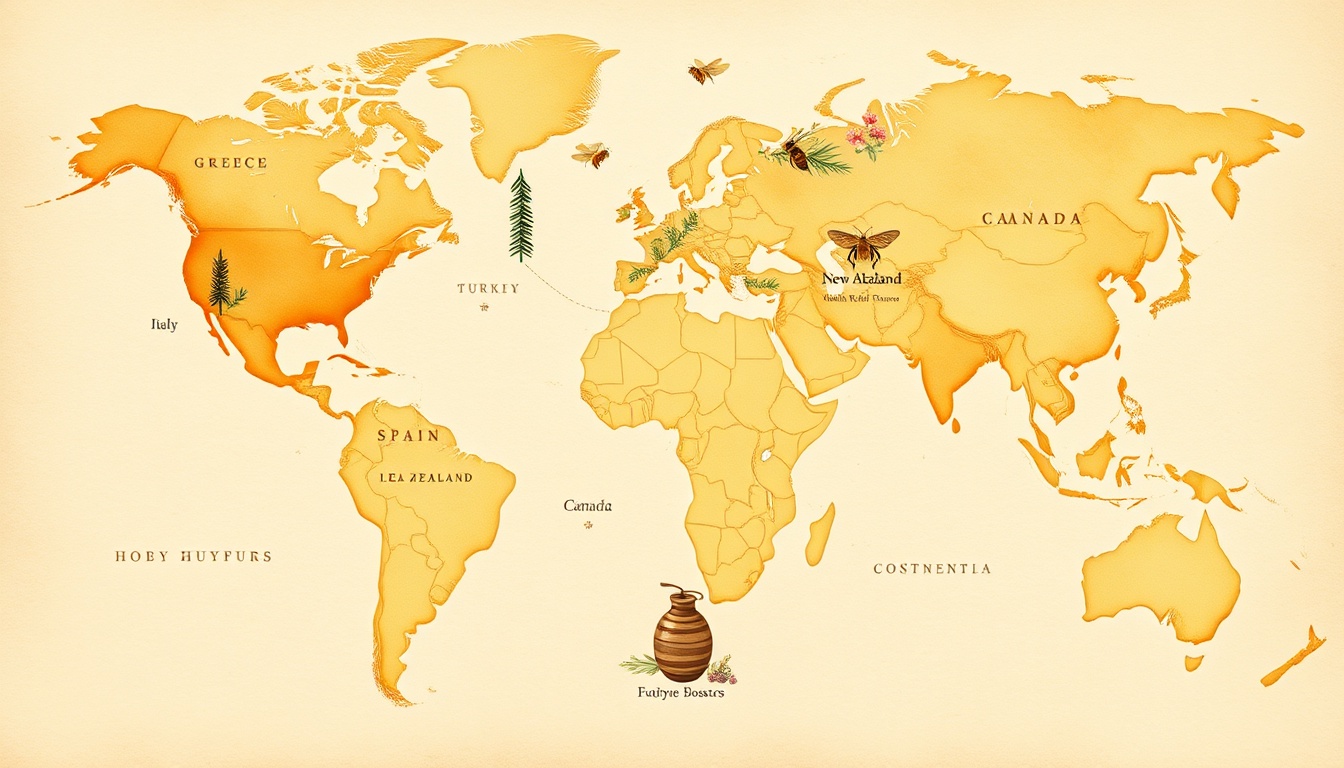
These rows are orientation, not scores. Harvest, weather, forage mix, storage, and processing can change color, aroma, texture, and intensity within every origin. Use the label cues to frame a question, the flavor notes to narrow preference, and the evidence check to verify the claim.
- Greece — Label cues: thyme, pine honeydew, and fir. Flavor orientation: herbal, resinous, woody, or mild. Evidence check: verify the exact protected EU name and specification in eAmbrosia; Greek imagery alone does not establish protection.
- Türkiye — Label cues: pine honeydew, highland polyfloral, and named regional honey. Flavor orientation: resinous, herbal, or robust. Evidence check: treat each geographic or floral name as a claim, not a quality tier; avoid honey sold as “mad honey” because the CDC advises against consumption.
- Italy — Label cues: acacia or robinia, chestnut, citrus, and millefiori. Flavor orientation: from mild and floral to bitter or woody. Evidence check: verify any DOP or IGP name in the EU register; taste and crystallization do not prove origin.
- Spain — Label cues: rosemary, heather, orange blossom, and named protected honey. Flavor orientation: floral, herbal, or malty, with liquid, crystallized, or gel-like textures possible. Evidence check: confirm the exact protected name and specification in eAmbrosia.
- New Zealand — Label cues: mānuka, kāmahi, rewarewa, and clover. Flavor orientation: profiles vary by botanical source and harvest. Evidence check: export honey labeled mānuka must meet the MPI definition using four chemical attributes and one DNA marker; that definition does not rank brands or establish a medical use.
- Canada — Label cues: canola, clover, buckwheat, fireweed, and mixed-floral. Flavor orientation: from mild and buttery to dark and robust. Evidence check: read the origin and floral wording literally and look for a traceable packer and batch rather than treating a familiar profile as proof.
- Australia — Label cues: leatherwood, jarrah, yellow box, eucalyptus, and Leptospermum. Flavor orientation: floral, woody, caramel-like, or eucalyptus-forward. Evidence check: color, aroma, an activity number, or national origin alone is not a complete authenticity finding.
- India — Label cues: mustard, litchi, eucalyptus, forest, and Himalayan honey. Flavor orientation: mild, floral, herbal, or strong across very different supply chains. Evidence check: determine whether the name means floral source, region, harvest method, or marketing description; avoid products promoted for grayanotoxin intoxication or therapeutic effects.
- Ethiopia — Label cues: highland, forest, coffee-area, and mixed-floral honey. Flavor orientation: creamy, herbal, floral, or dark. Evidence check: identify the producer or cooperative and batch; “raw,” “wild,” or rapid crystallization does not independently prove source or authenticity.
- Morocco — Label cues: thyme, orange blossom, euphorbia, jujube, and mountain polyfloral honey. Flavor orientation: floral, herbal, sharp, or rich. Evidence check: verify the named producer or packer, lot, and any certification instead of treating color, intensity, or traditional use as confirmation.
- Portugal — Label cues: heather, chestnut, eucalyptus, rosemary, mixed-floral, and protected names. Flavor orientation: herbal, woody, floral, or bitter. Evidence check: confirm the exact DOP name and specification in eAmbrosia; a flag or “Portuguese style” phrase is not equivalent.
- Japan — Label cues: acacia or robinia, tochi, buckwheat, mixed-floral, domestic-origin, and bee-species claims. Flavor orientation: delicate, floral, nutty, or robust. Evidence check: read botanical, geographic, and bee-species claims separately; price, rarity language, complexity, or crystallization cannot authenticate the jar.
Get the Honey Buyer's Cheat Sheet (free PDF)
16 varieties on one page — color, flavor, best use and what a fair price looks like — from the 304 honeys we track.
What Official Labels and Registries Actually Establish
In the United States, the FDA honey-labeling guidance explains that a single-ingredient product is named honey, while a honey-and-sweetener product must be identified as a blend and declare its ingredients. A floral source may be named when there is support that it is the chief floral source. The guidance states its scope and is not a global origin-certification program.
For protected European names, start with the European Commission overview of geographical-indication registers, then search the legal record and specification in eAmbrosia. PDO and PGI protection applies to the registered name and its specification. It is not a blanket endorsement of every honey from that country and does not make a medical claim.
For New Zealand export honey labeled mānuka, MPI’s mānuka testing rules require testing by an MPI-recognised laboratory against five attributes: four chemical markers and one DNA marker. The rules distinguish monofloral and multifloral mānuka within that export framework; they do not prove every separate label statement.
In the United States, USDA organic is a production-and-handling claim. USDA’s organic-labeling page says honey may be certified to current production and handling standards and must follow organic labeling rules. Search the Organic Integrity Database for certified operations. Organic certification does not by itself prove a floral source, geographic origin, raw-processing claim, or freedom from every possible adulterant.
Why No Kitchen Test Can Settle Authenticity
Honey is naturally variable, and different fraud questions require different evidence. The UK Government Chemist’s weight-of-evidence toolkit explains why authenticity investigations may need several independent sources when a screening test is not definitive. This weight of evidence can include label records, supply-chain documents, registry checks, targeted chemistry, pollen or DNA methods, reference databases, and laboratory context; each may answer a different question.
Water, flame, thumb, crystallization, color, aroma, and taste demonstrations are not reliable universal authenticity tests. A batch report is more useful when it identifies the sample or lot, laboratory, date, method, result, and claim being evaluated. Even then, one result should not be stretched beyond the method’s scope.
Safety Boundaries That Apply Across Origins
The CDC says do not give honey to a child younger than 12 months because of infant botulism risk. Country, protected status, organic certification, pasteurization, and a raw label do not remove that boundary.
Mad honey contains grayanotoxin and cannot be made safe by choosing a serving amount from a seller or travel story. The CDC Yellow Book lists potentially dangerous effects and says Avoid consumption. Seek urgent medical or poison-center advice after suspected exposure, especially for fainting, marked weakness, vomiting, slow heartbeat, low blood pressure, confusion, seizure, or breathing difficulty.
Food honey in a retail jar is not interchangeable with a wound-care device. The FDA database lists a cleared MEDIHONEY gel dressing as a regulated wound dressing. That device record does not clear grocery honey for wound use and this guide does not recommend applying food honey to wounds or burns.
How to Choose the Best Honey for You
The most defensible “best” choice is a traceable jar that fits your flavor and use—not a country winner. Apply the same sequence in a store, at a market, or when comparing two labels online.
- Read the statement of identity and ingredient list. “Honey,” “blend,” a floral source, an origin, and a protected name are different claims.
- Record the producer or packer and lot code. Traceability tied to the exact jar is more useful than a country reputation.
- Verify formal claims in the responsible registry: eAmbrosia for an EU protected name, MPI’s definition for New Zealand export mānuka, or USDA records for a U.S. organic claim.
- Treat sensory descriptions as preferences, not verdicts. Compare flavor, texture, and intensity only after the label evidence is clear.
- Ask what a test actually measured. Prefer a batch-linked report with a named laboratory, method, date, and result; do not turn one method into a universal pass or fail.
- Keep safety separate from provenance. Never give honey to an infant, avoid mad honey, and do not substitute retail food honey for a cleared wound dressing.