Eucalyptus Honey vs Manuka Honey
A detailed comparison to help you choose the right honey for your needs.
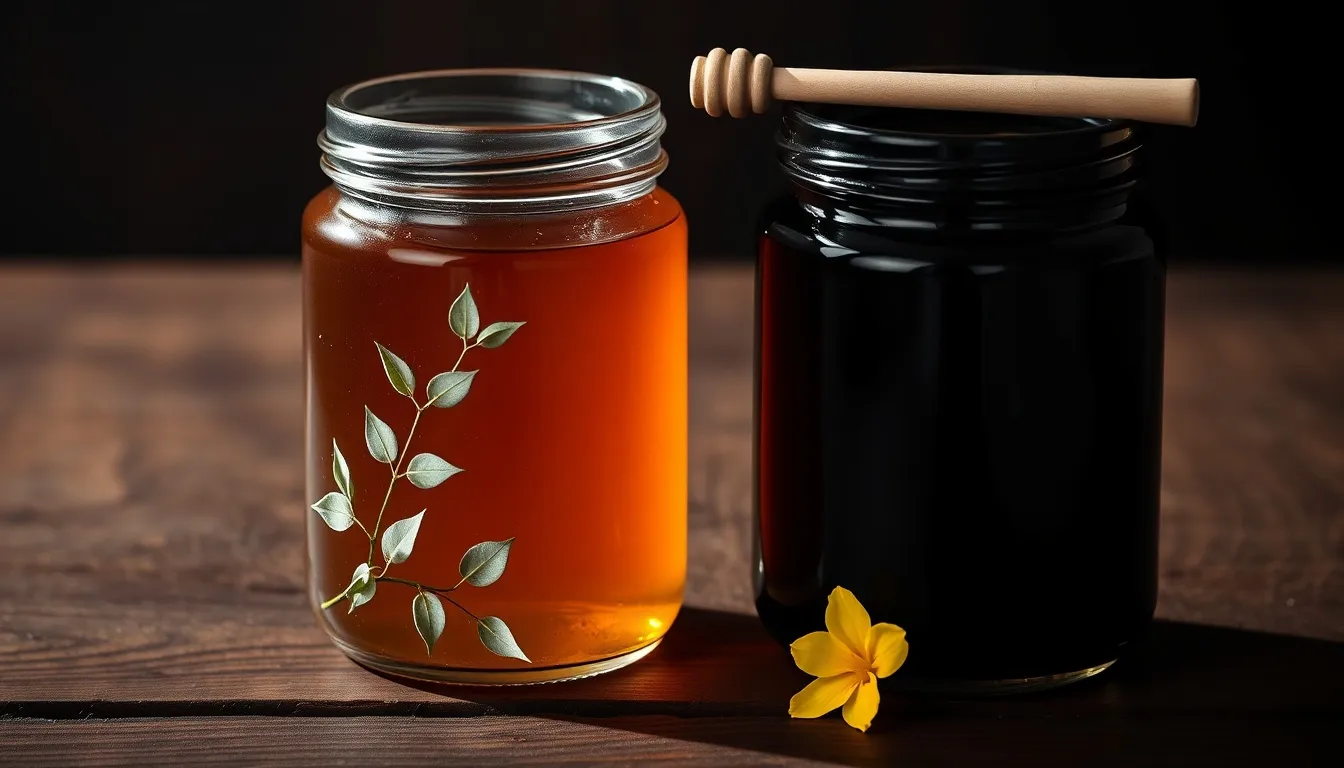
Quick Answer
Eucalyptus honey is the affordable respiratory-relief specialist with a natural mentholated character; manuka has the strongest clinical evidence for wound healing and antibacterial activity through its unique MGO compound — and costs several times more. Both come from related plant families. Choose eucalyptus for cold and cough relief, manuka for wound care and immune support.
At a Glance
Eucalyptus Honey
Mentholated, herbal, slightly medicinal
Respiratory health, colds, sore throats
$12-$22 per jar
Australia, Brazil, Mediterranean
Manuka Honey
Earthy, herbal, slightly bitter
Wound healing, immune support, digestive health
$30-$80 per jar
New Zealand
Head-to-Head
Flavor Comparison
Eucalyptus and manuka share botanical kinship (both plants belong to the Myrtaceae family) and this shows in their flavor profiles.
Both have herbal, slightly medicinal characters, but they express these differently. Eucalyptus honey carries a distinctive mentholated note, almost like a mild cough drop, with a cooling sensation and herbal warmth. The flavor is medium-bodied with a clean, slightly camphoraceous finish. Manuka honey is earthier and denser, with more bitterness and a thick, creamy texture that coats the palate. Where eucalyptus honey feels bright and clearing, manuka feels dense and grounding. Both honeys appeal to people who appreciate herbal, less-sweet honey styles rather than the pure sweetness of clover or acacia.
Nutrition Comparison
Manuka's MGO content gives it the edge in clinical antibacterial evidence.
No other honey has been as extensively studied for wound care and antimicrobial activity. The UMF/MGO grading system provides standardized quality assurance. Eucalyptus honey contains its own bioactive compounds including eucalyptol (cineole), which has documented anti-inflammatory and expectorant properties that specifically support respiratory health. While its antibacterial claims are less clinically validated than manuka's, eucalyptus honey has a long folk-medicine tradition for treating colds and chest congestion. Both honeys have respectable antioxidant profiles with eucalyptus providing dark-honey-level phenolic compounds.
Best Use Cases
Eucalyptus honey is the natural choice for respiratory complaints.
Its mentholated quality soothes sore throats and its expectorant properties are associated with loosening chest congestion; many people stir it into warm water during cold and flu season. It is also used in traditional medicine for bronchitis and sinusitis relief. Manuka honey's reputation for wound care and digestive health comes from medical-grade products used under clinical supervision — talk to a healthcare provider before using manuka for a wound, burn, or stomach ulcer rather than self-treating. Many people include a daily spoonful as a general wellness addition to their diet.
Price Comparison
Eucalyptus honey offers excellent value at $10 to $15 per jar, making it affordable for daily use as a health honey.
Manuka's $30 to $80 price reflects its limited production and extensive testing requirements. For respiratory-focused health support, eucalyptus provides strong benefits without manuka's premium cost.
Our Verdict
These are complementary rather than competing honeys. Eucalyptus is the respiratory specialist: affordable, effective for colds and coughs, and pleasant enough for daily use. Manuka is the wound-care and immune-support specialist with unmatched clinical evidence for antibacterial activity. If you can only afford one medicinal honey, consider what you need most. For seasonal colds and sore throats, eucalyptus delivers targeted relief at a manageable price. For broad-spectrum health investment and wound care, manuka justifies its premium.
Frequently Asked Questions
What is the difference between eucalyptus and manuka honey?
Is eucalyptus honey good for respiratory health and coughs?
Which honey is better for sore throats — eucalyptus or manuka?
Can eucalyptus honey be used for wound care instead of manuka?
What MGO or UMF rating of manuka offers similar everyday value to eucalyptus?
Is eucalyptus or manuka honey safe for children?
Best Honey For...
More Honey Comparisons
View allRelated Guides
Health Benefits
Nutritional and therapeutic benefits of honey.
Read GuideHoney for Sore Throat
Evidence-based sore throat relief.
Read GuideQuality & Grading
Identify quality honey and spot fakes.
Read GuideRelated Articles
Manuka Honey Benefits: 10 Science-Backed Uses Worth Knowing
10 evidence-based manuka honey benefits — wounds, sore throats, gut health, and skin care. Which UMF/MGO grade to buy.
Read ArticleManuka Honey Grading Systems Explained: UMF vs MGO vs KFactor
UMF vs MGO vs KFactor — manuka honey ratings decoded. Learn what the numbers mean and how to choose authentic manuka.
Read ArticleHoney for Wound Healing: Medical Products and Evidence Limits
Food honey is not a wound dressing. Understand the limits of medical-honey research, product-specific instructions, and when to seek professional care.
Read ArticleHoney for Eye Health: Benefits, Risks, and What Science Says
Can honey benefit eye health? Evidence on antimicrobial and anti-inflammatory properties for dry eyes and conjunctivitis.
Read ArticleRaw Honey vs Manuka Honey: Which Should You Buy?
Raw honey vs manuka honey: compare price, antibacterial strength, taste, and best uses. Is manuka worth the premium?
Read Article