Raw Honey vs Pasteurized Honey
A detailed comparison to help you choose the right honey for your needs.
Quick Answer
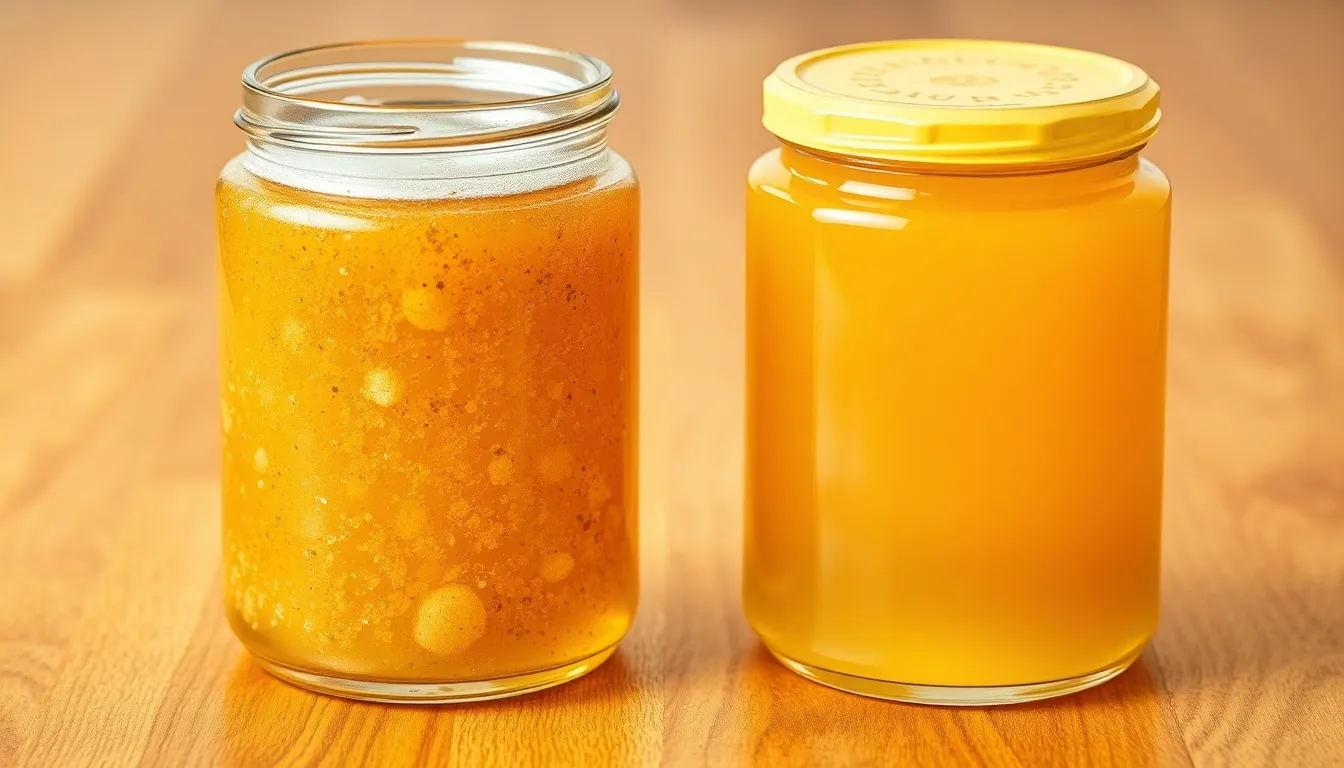
Raw honey retains all natural enzymes, pollen, and antioxidants because it is never heated above natural hive temperatures. Pasteurized honey is heated to 161°F (72°C) to create a smooth, shelf-stable product but loses most beneficial compounds in the process. For health benefits, raw wins decisively. For convenience and cost, pasteurized is fine for cooking.
At a Glance
Raw Honey
Complex, nuanced, varies by source
Health benefits, natural remedies, gourmet eating
$10-$25 per jar
Worldwide
Pasteurized Honey
Mild, consistent, straightforward sweet
Commercial cooking, squeezable bottles, shelf stability
$4-$10 per jar
Worldwide
Head-to-Head
Flavor Comparison
Raw honey delivers the authentic taste of the flowers bees visited.
Because it is minimally processed, the natural flavor compounds, aromatic volatiles, and subtle botanical notes remain intact. Each jar tells a story of its origin, with flavors ranging from light and grassy to deep and earthy depending on the floral source. The texture may include fine crystals, pollen specks, and trace amounts of propolis. Pasteurized honey has been heated to a temperature that kills yeast, delays crystallization, and creates a perfectly smooth, pourable consistency. However, this heat also strips away volatile flavor compounds, resulting in a more uniform and less interesting taste. What remains is clean sweetness without the botanical nuances that make raw honey interesting.
Nutrition Comparison
This is where the comparison becomes stark.
Pasteurization at 161°F (72°C) or higher destroys most of the heat-sensitive compounds that make honey nutritionally valuable. Enzymes like diastase, invertase, and glucose oxidase are denatured by heat. Bee pollen, which contains proteins, vitamins, and potential allergy-fighting properties, is typically removed by fine filtration that accompanies pasteurization. Many antioxidants and volatile organic compounds are degraded. Raw honey retains all of these beneficial components. Studies comparing raw and pasteurized versions of the same honey have found significantly higher enzyme activity, antioxidant levels, and pollen counts in raw samples. The basic calorie and sugar content remains identical in both versions, but raw honey provides substantially more nutritional value per spoonful.
Best Use Cases
Raw honey should be your choice whenever you are consuming honey directly: eating by the spoon, stirring into warm (not boiling) tea, spreading on toast, drizzling over cheese, or using as a health supplement.
These applications preserve its beneficial compounds and let you enjoy its complex flavors. Pasteurized honey is acceptable for baking and cooking where the heat will destroy enzymes anyway. Its smooth, pourable consistency makes it convenient for squeeze bottles and commercial food production. It is also less expensive, making it practical for recipes requiring large quantities of honey.
Price Comparison
Pasteurized honey is the budget option at $4 to $10 per jar, often sold in squeeze bottles at supermarkets.
Raw honey commands $10 to $25, reflecting smaller batch production and minimal processing. The price premium for raw honey represents genuine nutritional value that pasteurized honey has lost.
Our Verdict
If nutrition and health benefits matter to you at all, raw honey is the clear choice for direct consumption. The enzymes, antioxidants, pollen, and complex flavors lost during pasteurization are precisely what make honey more than just liquid sugar. Use pasteurized honey only in situations where you are cooking at high temperatures anyway, making the nutritional advantage of raw irrelevant. The small extra cost of raw honey buys meaningful health benefits that pasteurized honey simply cannot provide.
Frequently Asked Questions
What does pasteurization do to raw honey?
Is raw honey actually healthier than pasteurized honey?
Is pasteurized honey safe for infants?
Does raw honey crystallize faster than pasteurized honey?
How can I tell if honey is raw at the grocery store?
Can I use raw honey in cooking, or does heat destroy its benefits?
Best Honey For...
More Honey Comparisons
View allRelated Guides
Raw Honey vs Regular
Processing, nutrition, and how to choose.
Read GuideCreamed Honey Guide
What creamed honey is, the Dyce method, best varieties, and buying tips.
Read GuideWhat Honey Should I Buy?
Personalized quiz to find your perfect honey.
Read GuideRelated Articles
Types of Honey: A Complete Guide to 20+ Varieties
Guide to 20+ honey varieties — clover, manuka, buckwheat, wildflower, and more. How floral source affects flavor and use.
Read ArticleRaw Honey vs Regular Honey: What's Actually Different?
Raw vs regular honey: compare nutrition, enzymes, antioxidants, processing methods, and which one is better for your health.
Read ArticleHeather Honey Benefits: Why This Scottish Classic Stands Apart
Heather honey benefits: exceptionally high antioxidants, unique thixotropic gel texture, and bold, complex flavor profile.
Read Article