What linden honey tastes and looks like
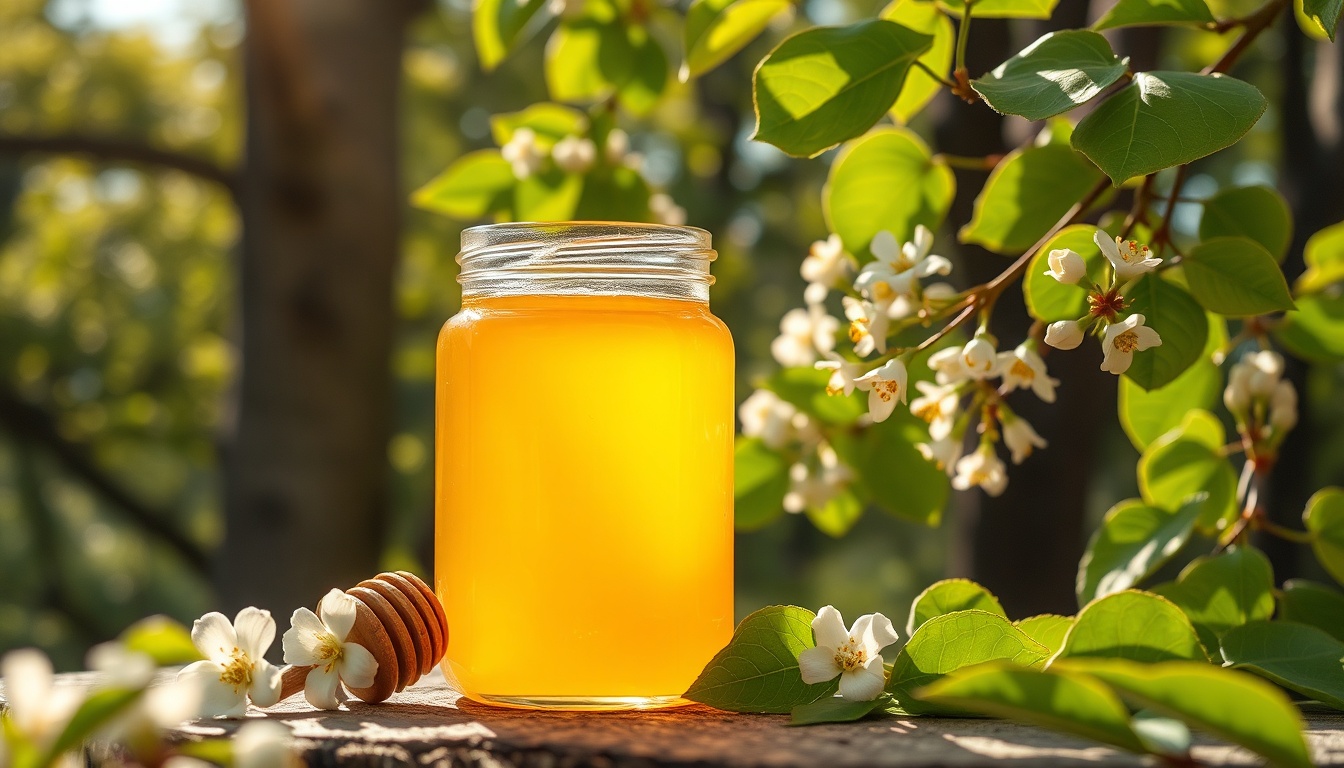
Linden honey comes from *Tilia* blossoms. In North America the same honey is often sold as basswood; in the UK as lime tree honey; in France as tilleul. The jar is pale to light gold, sometimes with a greenish tint when fresh — much lighter than chestnut or buckwheat.
The aroma is the identifier: floral, faintly minty, a little woody-balsamic. Taste is moderately sweet with a short herbal finish, less sugary than clover and less bitter than chestnut. If a “linden” smells only of generic blossom with no minty lift, it may be a blend.
This catalog lists twelve linden and basswood rows. German linden honey and Hungarian linden honey are the Central European core; USA basswood honey, a Wisconsin jar from Honey Acres, is the North American *Tilia americana* listing. Three producer jars joined in October 2026: The Appalachian Beekeeping Collective basswood honey from Virginia and West Virginia, Smiley Honey basswood honey from central Michigan, and Ames Farm basswood comb honey from Minnesota.
Colour and crystallisation
Linden sits in the extra-light-amber part of the USDA Pfund scale, darker than water-white acacia and far lighter than amber chestnut. Colour class is appearance, not a quality grade.
It often sets faster than high-fructose honeys. Fine, creamy crystals are common within a few months at room temperature. That set texture is normal; it is not spoilage. See why honey crystallises.
Get the Honey Buyer's Cheat Sheet (free PDF)
16 varieties on one page — color, flavor, best use and what a fair price looks like — from the 304 honeys we track.
Origins in this catalog
*Tilia* nectar flows are short — typically a couple of weeks in late June or July — so named-origin jars are seasonal. Europe (Germany, Hungary, France, plus Polish and Czech rows under OTHER) and North America (USA, Canada basswood) both appear in the seed data.
Named listings: German, organic German, Hungarian, French linden honey, Polish, Czech, generic linden honey, USA basswood, Canadian basswood honey, Appalachian basswood, Smiley Honey basswood and Ames Farm basswood comb.
Basswood and linden are the same genus. The label difference is language and continent, not a second plant.
Price
In our catalogue, the middle half of 12 verified linden jars cost $8 to $13 (Oct 7, 2026), the band the linden honey page shows. Single jar prices run from $3.50 to $19.00 across the twelve linden rows — jar prices, not per pound. The chart on this page groups those rows by origin. The origin chooser reads the same dataset.
Catalog prices are not live merchant quotes.
How to use it
Linden is a light-tea honey: it dissolves without burying chamomile, mint or green tea. It also works on mild cheeses and in baking where you want floral aroma without chestnut bitterness.
It is a poor match for barbecue glaze or espresso — use chestnut or buckwheat there.
How to spot a mislabelled jar
A true linden should be pale gold and smell minty-floral. Dark amber “linden” is usually mixed with honeydew or a darker blossom.
Country and harvest year on the label are more useful than the word “premium”. A blend labelled only “European floral honey” is not a linden monofloral.
Never give honey to a child younger than 12 months because of infant botulism risk (CDC). That applies to linden, basswood and every other honey.
Composition, as chemistry
Linden is a blossom honey under EU honey law. Council Directive 2001/110/EC Annex II keeps blossom honey electrical conductivity at not more than 0.8 mS/cm, unlike the chestnut / honeydew exception. That is a classification threshold, not a serving instruction.
*Tilia* nectar is known for terpene aroma compounds that survive into the honey as smell. This page does not give a serving protocol.